







2026年3月
It is difficult to think of contemporary Philippine arts and culture in general to be contextualized in anything but the post-pandemic. I say this even as it is understandable that we would rather not think about this at all. Think of it as the chosen antidote to the unprocessed grief, trauma, and fear wrought by living under one of the longest and most violent Covid-19 lockdowns in Southeast Asia.
In the Philippines, there has been a frenzy of activity in the creative sectors, like a massive adrenalin rush to get back to “normal” since the slow lifting of the lockdowns in late 2022. My tendency as a critic has been to watch with interest at this post-crisis unfolding — I will be the last to judge the predisposition towards earning what was lost during the pandemic. After four years of this flurry of activities and events, performances and global presentations, along with a new Creative Industries Development Act and its attached council, it seems time to address the elephant in the room.
The performance of forgetting
During the pandemic lockdowns, what surfaced at scale was the precarity of cultural and creative workers, as well as the instability of the sectors we work within. The closure of performance venues and social distancing requirements surfaced everything that has been systemically wrong with the theater sector. It’s not just that the majority of its workers are barely paid a living wage and are without social security and medical benefits. It’s also that there is a minority in the theater system that were not at risk at all — the few who had the wealth, privilege, and/or power so that even a global crisis like the pandemic did not mean going hungry, or running out of savings, or even changing lifestyles.
The pandemic of course also meant the privileged few performing its civic duty of rising to the occasion of the majority who were feeling the brunt of the crisis, something that happened across all sectors, creative and otherwise. For the cultural sectors though, these engagements meant honest discussions about the precarious nature of creative work in the country, the instability of our modes of production, and the violence of capital.
It was also clear that no amount of fundraising, mutual aid, and community building could change what was wrong with our creative systems. Instead, hope was pinned on policy-making, for which the usual suspects in the House of Representatives and the Senate rose to the occasion, building the Creative Industries Bill, one that is premised on the monetary contributions of the creative sectors to the country’s GDP; but which conveniently fails to respond to the precarity and instability, the oppressions and violence, of the current systems.
In the flurry of post-pandemic creativity, it was no surprise that all we had known to speak of during the pandemic, and all that we had learned about the conditions of our existence as creatives and cultural workers, have been silenced. To an extent, one might view the frenzied return to normal — the staging of local productions that are sure to earn money, the investments on foreign productions to get that small niche audience that can afford tickets, the re-staging, repetition and reconfiguration of old material in the present — as a performance in forgetting.
The forgetting of all that we know to be unfair and unjust about the current creative systems; the forgetting of the precarity of a majority of its labors; the forgetting of the uncanny hierarchy of a few with power, wealth, and privilege who live without risk, and a majority growing larger by the day, who are without the most basic of needs.
The staging of the familiar
During the pandemic, and across the time the theater sector campaigned for the passage of the Creative Industries Bill into law, theater workers and artists waxed romantic about their work and its contributions to the nation. We engaged in the notion of the theater as a mirror to our contemporary conditions; its value premised on its immeasurable contribution to our sense of nation and citizenship; its importance tied to the ways it speaks of and to our struggles and crises, in new and original ways. We talked about how arts and culture, and theater, stand for the soul of the nation, which keeps us alive and connected to each other.
Yet, in the past four years, since the business of the theater started to regain its footing, all that was said about Philippine theater — from the truthful to the romanticized — seems to be nothing more thana figment of our imagination, a vestige of a time of crisis.
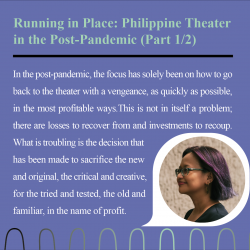
In the post-pandemic, the focus has solely been on how to go back to the theater with a vengeance, as quickly as possible, in the most profitable ways. This is not in itself a problem; there are losses to recover from and investments to recoup. What is troubling is the decision that has been made to sacrifice the new and original, the critical and creative, for the tried and tested, the old and familiar, in the name of profit.
This frenzied revival of the theater came with the predisposition towards repetition and redundancy. The best-selling productions in the pre-pandemic have been re-staged again and again. Old films are being reconfigured for the stage; and some of those stage versions are also made into film. Discographies of pop bands continue to be fed into the theater machine, making for musicals that sacrifice storytelling for the jukebox experience. Even original Filipino work, the few that are being staged, have become less and less surprising, with stories that have been done before and characters we’ve seen too many times.
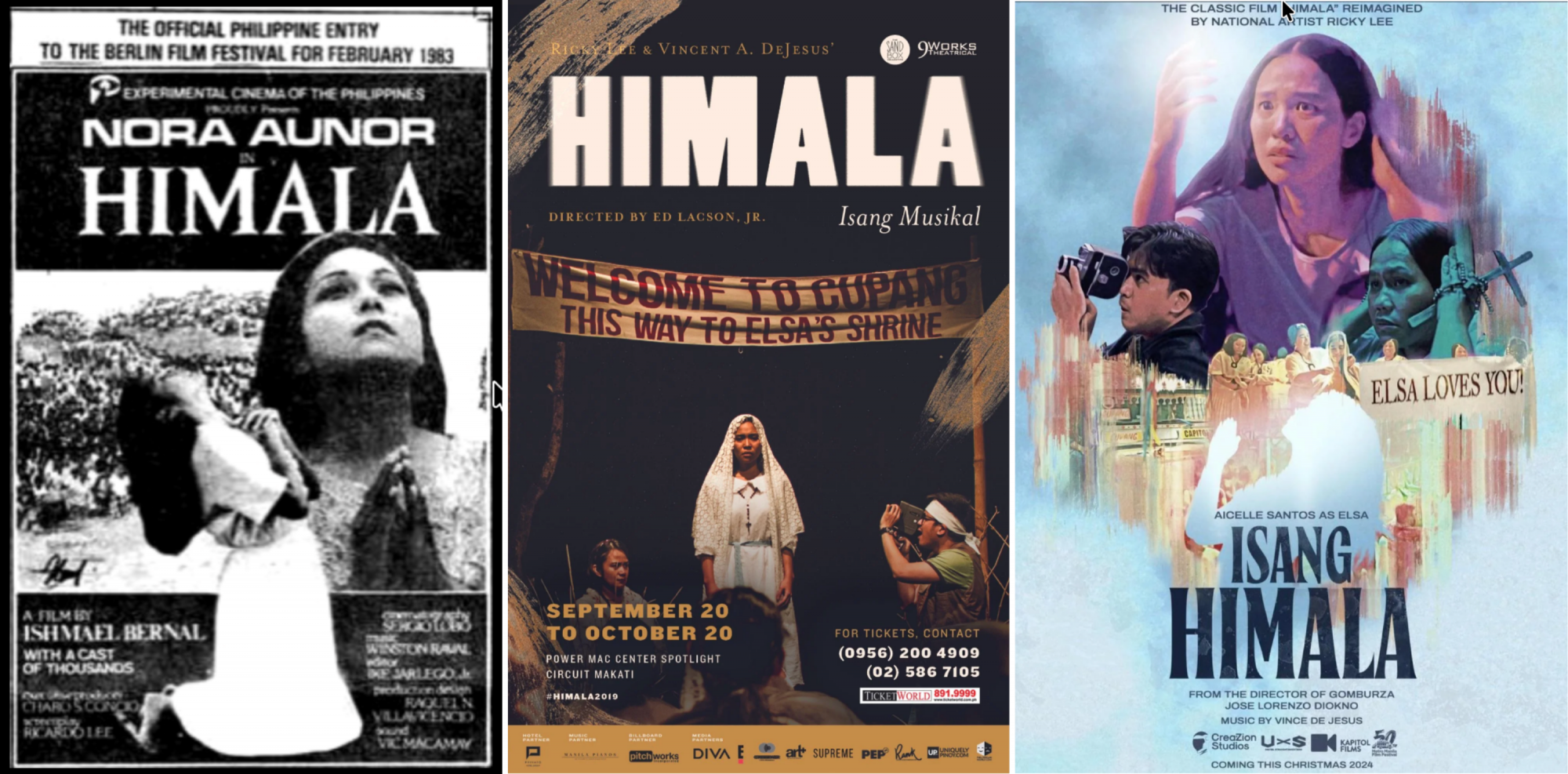
Himala (1982) was a film written by Ricky Lee and directed by Ishmael Bernal; Himala Isang Musikal, a musical by Ricky Lee and Vince De Jesus, was first staged in 2003, restaged in 2013 and 2018, and re-made into a musical film in 2024.
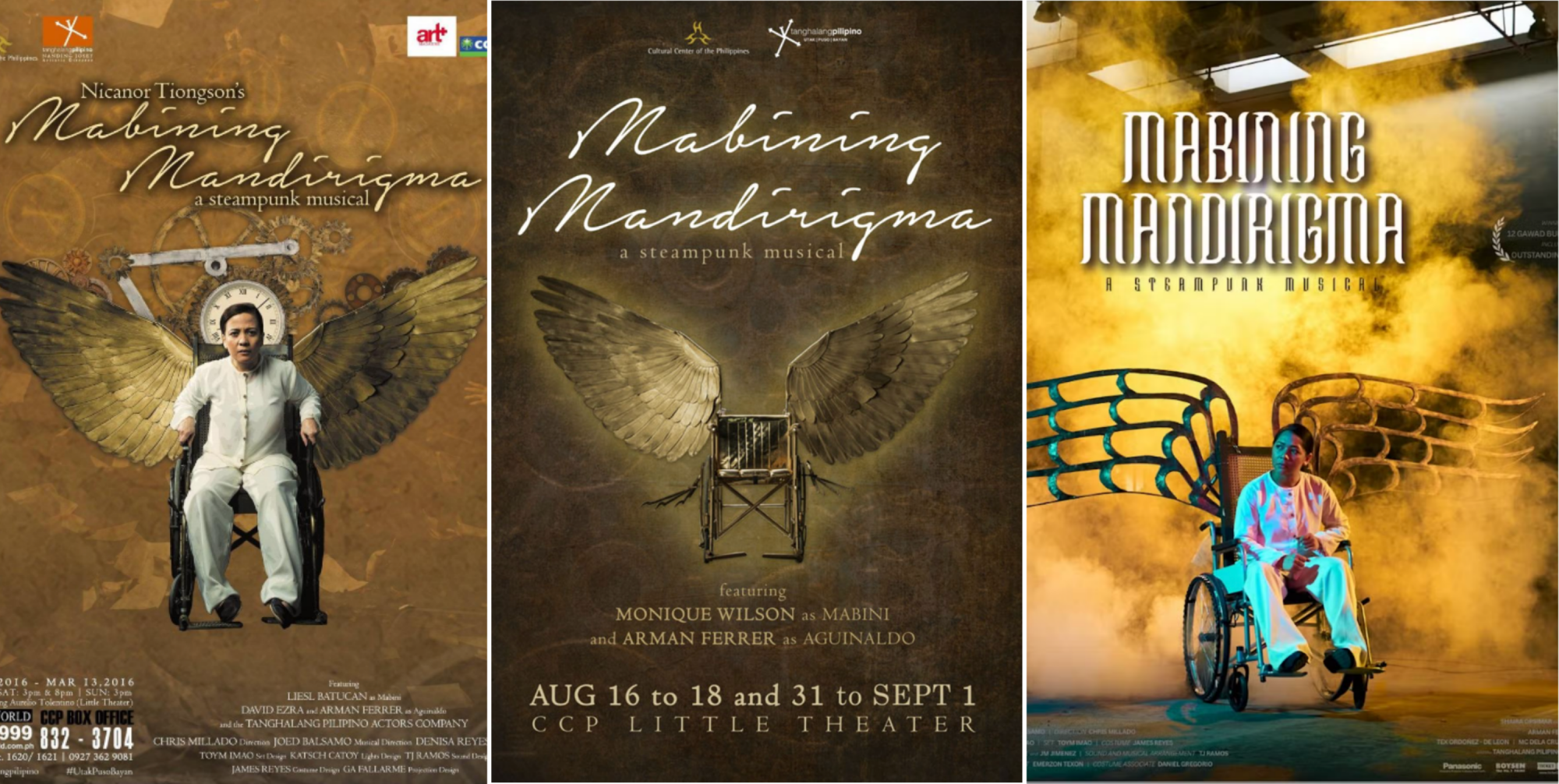
Mabining Mandirigma (Tanghalang Pilipino) was first staged in 2015, re-run in 2016, again staged in 2019, and again in 2026. Tanghalang Pilipino is the resident drama company of the Cultural Center of the Philippines, a government-funded institution.
In this current theater landscape, a chunk of the niche theater audience is spending its money on foreign productions, whether non-Filipino plays being produced and staged by a local theater company, or a completely foreign production including the Philippines in its Southeast Asian tour. Both are of course grand displays of Filipino talent — the former always reveals how our theater professionals can stage foreign productions like it’s nobody’s business; the latter will always include a token Filipino actor or two, also as a way to bring local audiences in. Both are also indicative of a colonial mentality that local theater still lives off and presumes of its audience, but more importantly, a colonial mentality that the theater refuses to challenge.
Much might be said about the school productions and university theater groups. Without the pressure of earning, and a default audience of students who will be required to watch these plays, it is through this mode of theatrical production that one might still be surprised. These are of course at the mercy of the ideologies that are nurtured in these universities; at least it isn’t simply at the mercy of the familiar, nor does it simply capitalize on nostalgia.
There are of course experimental theater and performance practitioners and groups which, in the past year or so, have found community and solidarity through common funding interests and sources. While there is interesting new work here, this common interest is cut from the same cloth as the mainstream mode of production, which not only cradles all that is unfair and unjust in our theater system, but also subsists on cliquishness and exclusivity — better to keep funding sources in the same pockets.
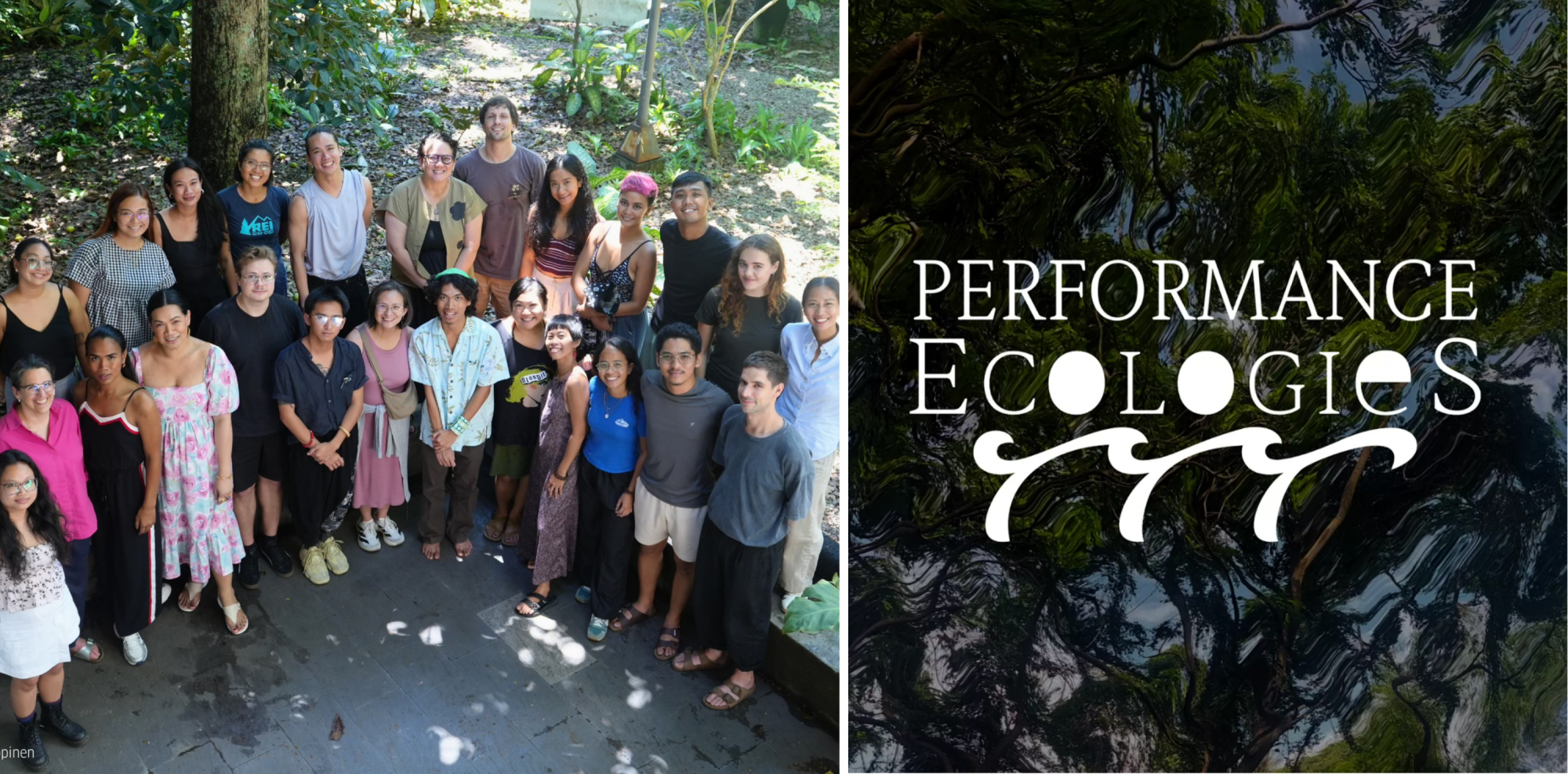
Post-pandemic Philippine performance experimentations in the clutches of foreign NGO funding structures. Photo from the Goethe-Institut Philippinen Facebook Page, publicly available, posted on June 16, 2025.
The distrust of the audience
At the heart of the decision of the theater to do revivals and reprisals, repeats and reconfigurations of the old, and the uncritical return to the same oppressive modes of production, is a judgment of the audience. It is a presumption of what they might step into the theater for, what they might spend their money on. If the current production landscape is any indication, it is apparently not what is new or unfamiliar or difficult.
This is no different from the criticism that television and commercial films always get, which is that these shows and films pander to the audience. Which begs the question: if theater is now no different from commercial film and TV, what becomes of its promise of invaluable creativity and criticality? Of holding up a unique mirror to our contemporary conditions? Of building a socio-politically aware community around the making and spectatorship of the theater?
Understandably, the predisposition to regain what was lost during the pandemic lockdowns could only be the strongest, most urgent impetus for the return to the theater. To put people back to work, to recover production losses, to bring back the audience into the theater — these are not wrong nor horrible choices. To a certain extent, it is what’s expected: this is after all the nature of capitalism, which is at the heart of the making of mainstream arts and culture in the country.
But there is the adrenalin rush and the creativity it cradles; and there are the sober, thoughtful decisions to be made based on lessons learned about the precarity of our cultural workers, artists, and creatives, the limits of the theater system and the need to hold it accountable for the oppressions it lives off; and the importance of an audience that seeks to be challenged by the theater, not comforted by it.
The adrenalin of running in place will be exhausting and get us nowhere. The sober decision to move towards changing the systems that we have proven do not work will be exhausting, too. But at least it gets us somewhere else.
Part two on the possibilities for the theater, given lessons learned during the pandemic lockdowns, the new laws and cultural agencies in place, and in the context of ongoing wars.
本網站內一切內容之版權均屬國際演藝評論家協會(香港分會)及原作者所有,未經本會及/或原作者書面同意,不得轉載。