






2025年12月
Observing recent productions in the Korean theatre scene, one often notices that distinct audience groups tend to coalesce around performances with particular characteristics. Among these developments, the influx of new audiences—clearly differentiated from existing theatre-goers—is especially striking. One cannot help but hope that such diversification of audiences will further invigorate the Korean theatre scene in the years to come. This essay examines several representative cases. It first considers how the gradual expansion of musicals has led to increasingly diverse audience formations. It then explores recent trends in which audiences originally cultivated through musicals are being drawn into spoken theatre. Additionally, the 2025 Seoul Performing Arts Festival, guided by the theme of “new relationships among art, technology, and science in the age of digital technology”, introduced pluralistic performances that transcend the conventional boundaries of theatre. As a result, audiences interested in interdisciplinary practices based on music, video, and media—beyond traditional theatre spectators—filled the seats. As society changes, theatre changes, and audiences change alongside it. Through such transformations, one may hope that Korean theatre will continue to expand its reach, illuminate diverse corners of society, and contribute to its development in more constructive directions.
Shifting Landscapes in Korean Musical Theatre
The large-scale introduction of renowned Western musicals into Korea began in earnest in the early 2000s, driven by productions such as Notre-Dame de Paris, The Phantom of the Opera, Les Misérables, Rent, etc. While some of these productions toured Korea in their original forms, many were staged as licensed productions featuring Korean casts. Today, Western blockbuster musicals continue to enjoy immense popularity. At the same time, sustained interest and investment in original Korean musicals have gradually reshaped the musical theatre landscape.
Korean original musicals trace their roots to small-theatre productions since 1996 such as Saljjak Obseoye and Love Rides the Rain. A turning point came with The Last Empress (1997), which marked the beginning of large-scale productions and bold attempts to enter international markets. As public interest in musical theatre grew, initiatives such as the Arts Council Korea’s Performing Arts Creation Incubator and New Works of the Year programmes significantly promoted the development of original musicals. Meanwhile, musical theatre education was actively encouraged as an extracurricular activity in schools, enabling professional practitioners to work as arts instructors. The International Musical Festival in Daegu also played a pivotal role in energising the field. Representative productions that emerged during this period include Laundry (2005) and Finding Kim Jong-wook (2006). Continued support from public institutions and private cultural foundations laid the groundwork for achievements such as Maybe Happy Ending, which won a Tony Award in the United States last spring.
Several private production companies have since established stable repertoires of original and licensed musicals, building strong fandoms through star marketing, sustaining long runs, and exporting licensed productions overseas. Musicals such as Mamma Mia!, Chicago, Rebecca, The Last Empress, Hero, Jekyll & Hyde, Amadeus, Marie Curie, Fan Letter, etc. continue to fill theatres, encouraging repeat attendance from highly loyal audiences.
Perhaps reflecting the Korean people’s long-standing fondness for song and dance, musical theatre in Korea has taken on new forms by engaging regional audiences. As part of the Ministry of Culture, Sports and Tourism’s initiative to revitalise regional performances, substantial support has been extended to locally based productions. Many regions have developed musical-style performances that integrate dance and song with regionally grounded narratives. Representative examples include Independence Army Arirang by the Miryang Arirang Art Troupe and Danjong, 1698 by Yeongwol HJ.
New Audiences for Regional Musical Content
The musical Independence Army Arirang (original story by Jang Byeong-su; adaptation and direction by Kim Gwan; music and musical direction by Yoon Jeong-in), produced by the Miryang Arirang Art Troupe (Artistic Director: Kim Geum-hee), premiered at the Grand Theater, Busan Cultural Center on 17 August 2025, in commemoration of the 80th anniversary of Korean independence.[1] The work depicts the lives of students of Jeon Hong-pyo, principal of Donghwa School in Miryang—figures such as Kim Won-bong, Park Cha-jeong, Choi Su-bong, and Yoon Chi-hyeong—who devoted themselves to the independence movement in China. In the prologue, Kim Won-bong appears as a tragic figure imprisoned in a North Korean political prison camp in 1958, serving as a narrative commentator who intervenes in scenes of intense struggle with his personal voice and perspective. Structurally, the musical does not adopt a fully sung-through format; spoken dialogue and songs are clearly delineated, interwoven with ensemble dance and choral numbers. The titular song draws on “Miryang Arirang”, which independence fighters sang to console one another while longing for home. In the finale, the refrain of “Independence Army Arirang” is sung in full by the entire cast, at which point the audience naturally joins in. The performance thus unites “Arirang” from its historical roots, through its role in the anti-colonial struggle, to its resonance in the present moment of the 80th anniversary of liberation. The sight of audiences of all ages from Gyeongnam and other regions of Korea singing together with the cast vividly testified to the emergence of a new audience demographic.
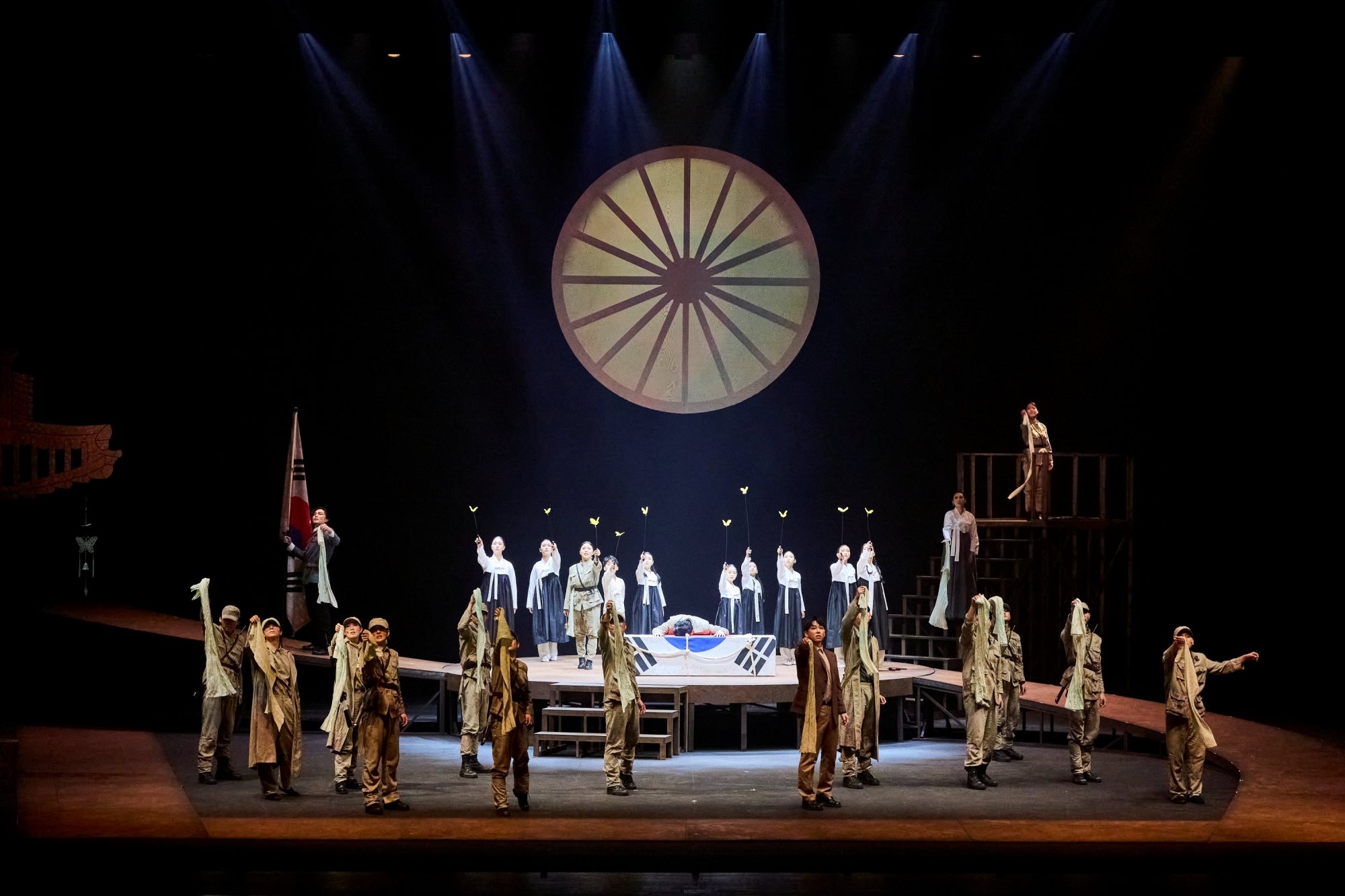
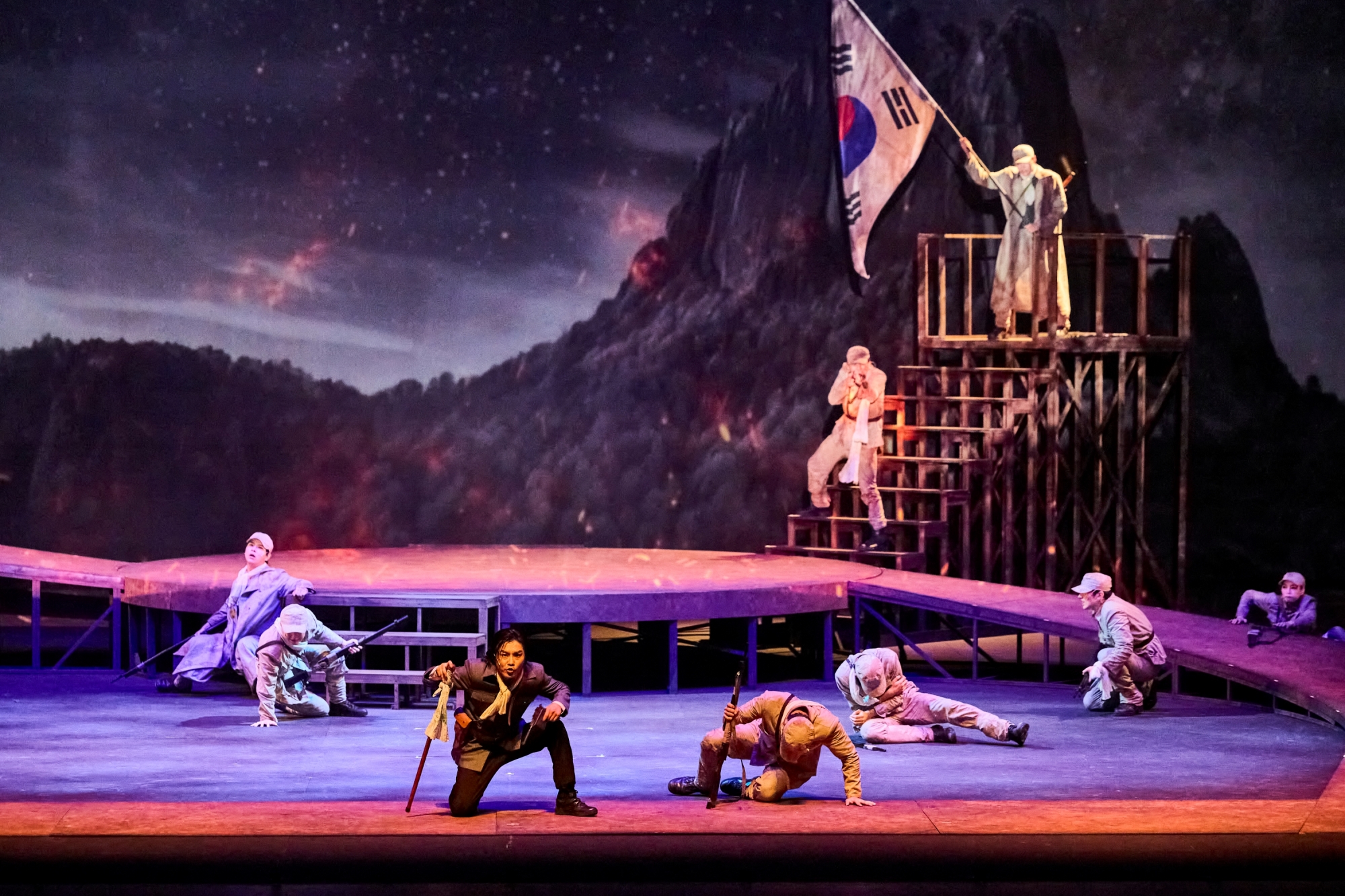
Independence Army Arirang (Photo courtesy: Miryang Arirang Art Troupe)
A similar phenomenon occurred in early October, at the beginning of the Chuseok holiday, in Yeongwol, Gangwon Province. From 2 to 5 October 2025, Danjong, 1698 (written and directed by Han Seung-won; produced by Yeongwol HJ) was staged at Jangneung, the royal tomb of King Danjong, a UNESCO World Heritage site.[2] Set against the actual landscape of the tomb, the production captivated large audiences with its grand scale, compelling performances, and dynamic pacing. Like Independence Army Arirang, it employs a structure in which dialogue and song are distinct rather than fully sung-through. Particularly notable were the vivid group dances representing the four seasons, the creative use of props such as straw hats and carrying frames, and the energetic choreography that offered rich visual pleasure to audiences on a chilly autumn evening. Beyond spectacle, however, the production’s greatest virtue lay in its effort to transcend historical pain and pursue the posthumous restoration of King Danjong’s honour. As the audience joined the cast in a final chorus, the illuminated Jangneung tomb emerged behind the stage, bringing the performance to a resonant close.
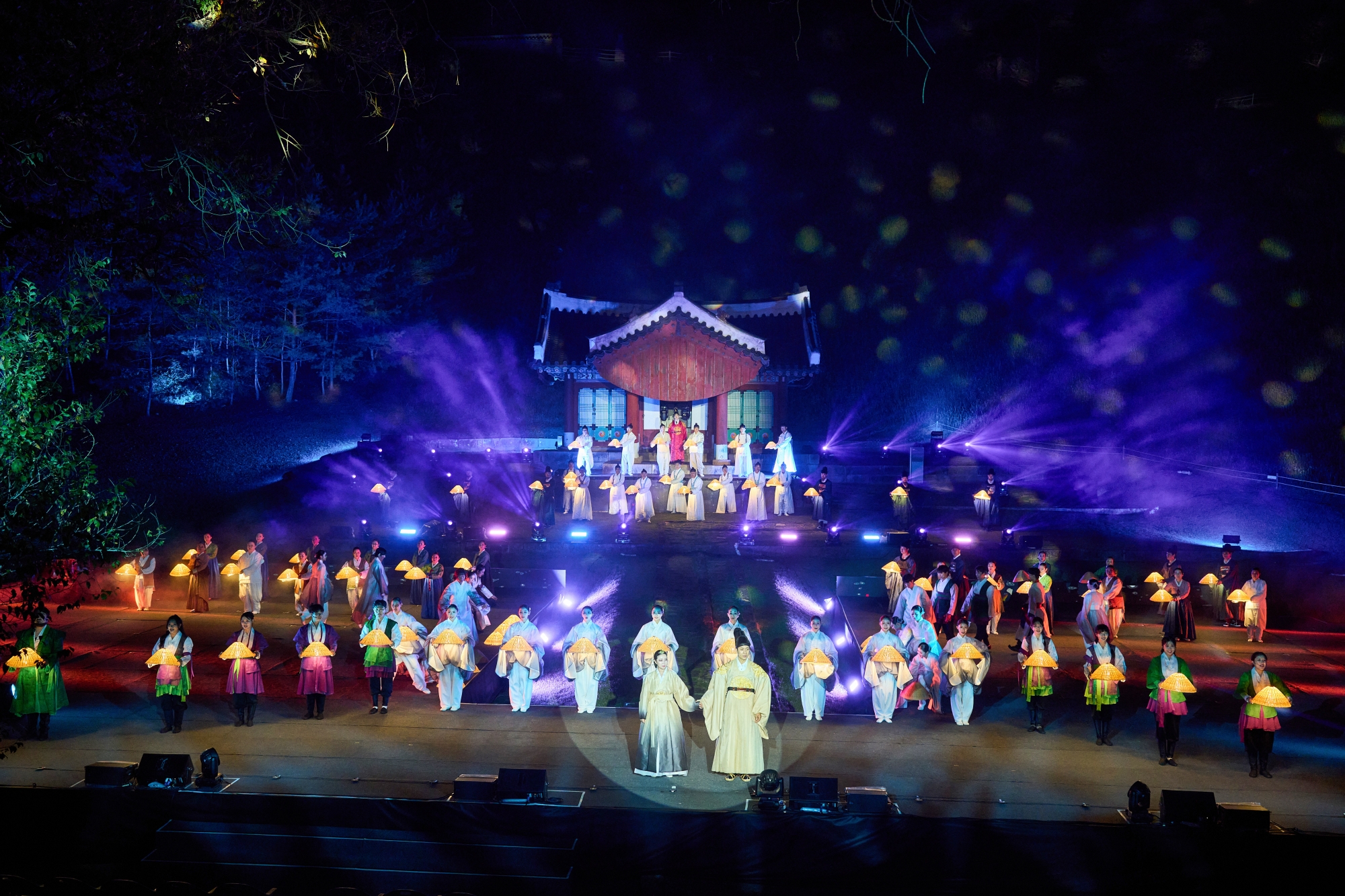
Danjong, 1698 (Photo courtesy: Yeongwol HJ)
Musical Audiences Entering Spoken Theatre
While musical theatre audiences have largely solidified in the Seoul metropolitan area, regionally supported musical content has successfully drawn large numbers of local audiences unfamiliar with theatre-going into performance venues. Such achievements are especially valuable, as positive experiences with theatre can lead to long-term diversification and expansion of audiences. In this context, it is worth noting several cases in the latter half of 2025 in which private production companies known for successful musicals also attracted large audiences to spoken theatre productions.
One such example is A Mirror by Sam Holcroft (translated by Sung Su-jung, adapted and directed by Kim Tae-hyung), produced by Go Kang-min of MBZ Company and staged at Yes24 Art One Hall 1 in Daehak-ro (24 June to 14 September 2025). The production concluded a successful long run. Another case is On the Beat by Cédric Chapuis (directed by Min Sae-rom, dramaturgy and translation by Park Da-sol), co-produced by Library Company and Project Group Ilda, which also enjoyed a strong reception at Dongguk University’s Lee Hae-rang Theater (19 August to 12 October 2025).
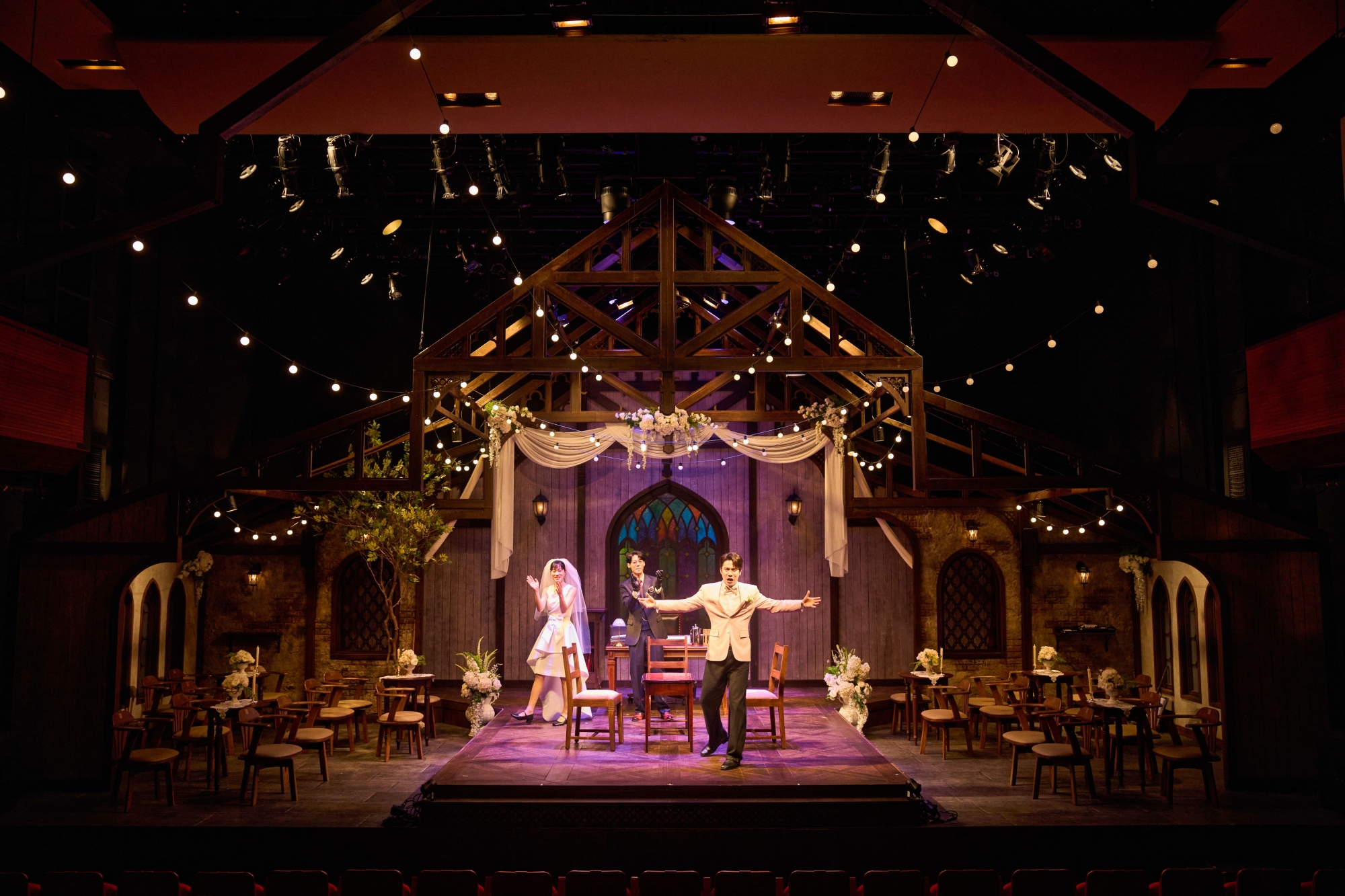
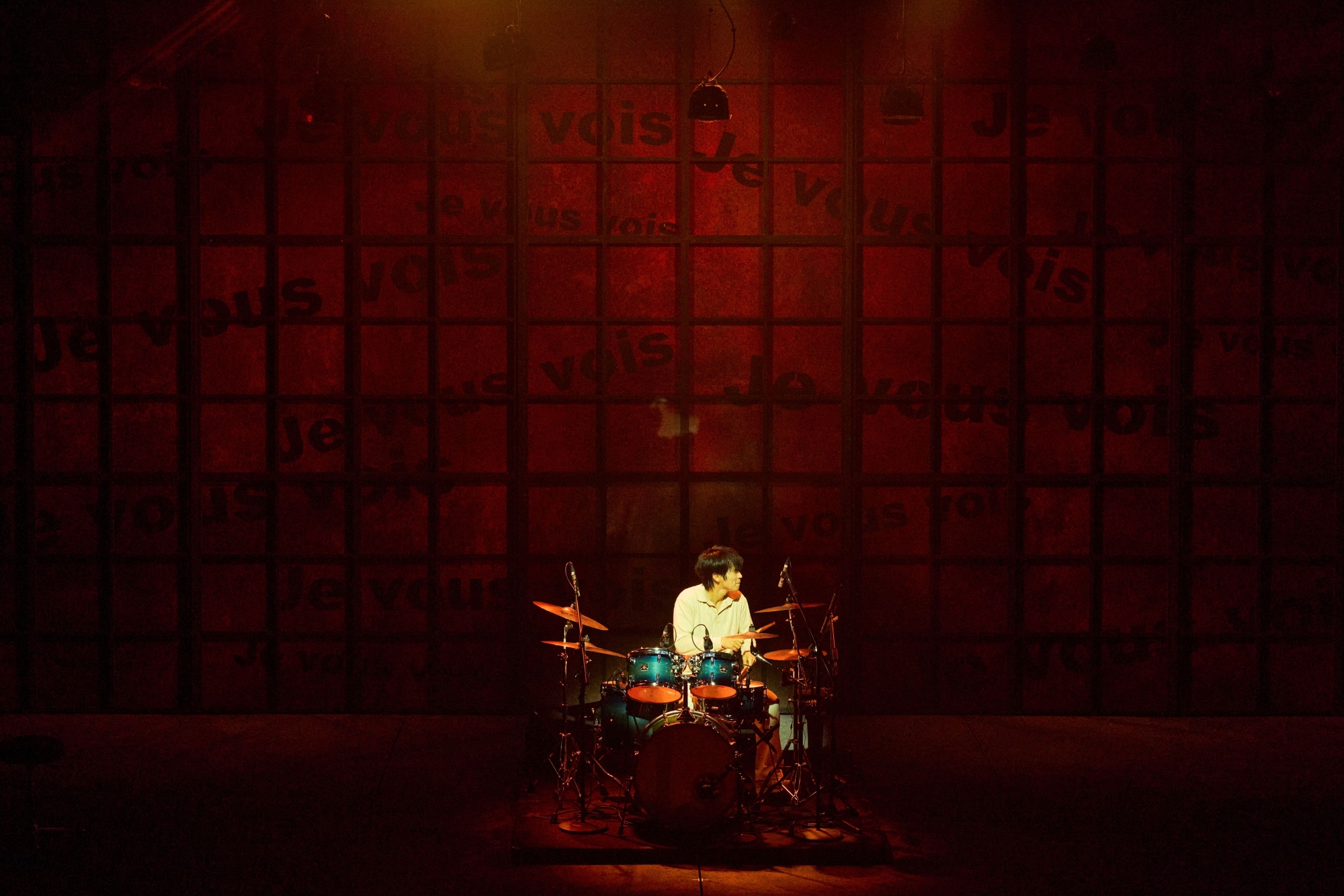
Left: A Mirror (Photo courtesy: MBZ Company);
On the Beat (Photo courtesy: Project Group Ilda)
MBZ Company, which recently produced the hit musicals Fraternité and Red-haired Anne (based on Anne of Green Gables), continues to balance musical and spoken theatre production. A Mirror, originally a West End success, featured triple casting of actors well loved by musical audiences, including Kim Jae-beom, Kim Do-bin, Joo Min-jin, Choi Ho-seung, Park Jung-won, and Ahn Ji-hwan. Set during a time of strict theatrical censorship, the play imagines a clandestine performance disguised as a wedding ceremony, with the audience attending as wedding guests. With fluid scene transitions, persuasive adaptation, and emotionally compelling performances, the production entertained while also posing serious questions about truth through the subtle interplay between theatre and reality.
On the Beat, written and originally performed by French actor-director Cédric Chapuis, was nominated for the Molière Award in 2016 and won the Best Popular Solo Performance at the Festival Off Avignon 2021. The play follows Adrien, a lonely boy who discovers rhythm through drumming and learns to communicate with the world by finding beauty in everyday sounds. First staged in Korea in 2021 to great acclaim, the 2025 revival featured a larger venue and rotating performances by Yoon Na-moo, Kang Ki-dung, and Jung Seung-ho. Over its 110-minute runtime, each actor commanded the stage as a solo performer, delivering an electrifying, concert-like experience driven by powerful rhythm rather than intimate psychological detail.
Both productions extended the theatrical experience through photo zones, merchandise, and interactive programme books, contributing to a reconfiguration of the contemporary theatre landscape. Their success demonstrates how private companies, independent of public theatre infrastructure, are employing diverse strategies to heighten audience satisfaction through high-quality productions.
New Audiences for Theatre through Technology
Recent Korean theatre has increasingly reflected the pervasive influence of technology in everyday life. At the 2025 Seoul Performing Arts Festival (SPAF), themed around “new relationships among art, technology, and science in the digital age”, numerous productions expanded the boundaries of theatre and attracted audiences with diverse interests beyond conventional theatre-goers.[3]
Among works presented as “theatre” yet surpassing traditional theatrical conventions, Haribo Kimchi by Jaha Koo stands out. Previously introduced at the SPAF with his “Hamartia Trilogy”, Koo returned with this new work (Daehakro Theater QUAD, 16–19 October 2025). Supported by the Belgian arts organisation CAMPO, Koo—who defines himself as a “theatre maker”—uses food as the central theme. Guiding audiences through video images of Seoul’s urban landscape, he reveals a makeshift street food stall on stage, inviting two audience members to join him in cooking and sharing food while narrating personal stories tied to culinary memories. Drawing on autobiographical experiences from Korea, the Netherlands, and Belgium, Koo integrates music, video, text, robots, and everyday objects into a theatrical language forged at their intersection.
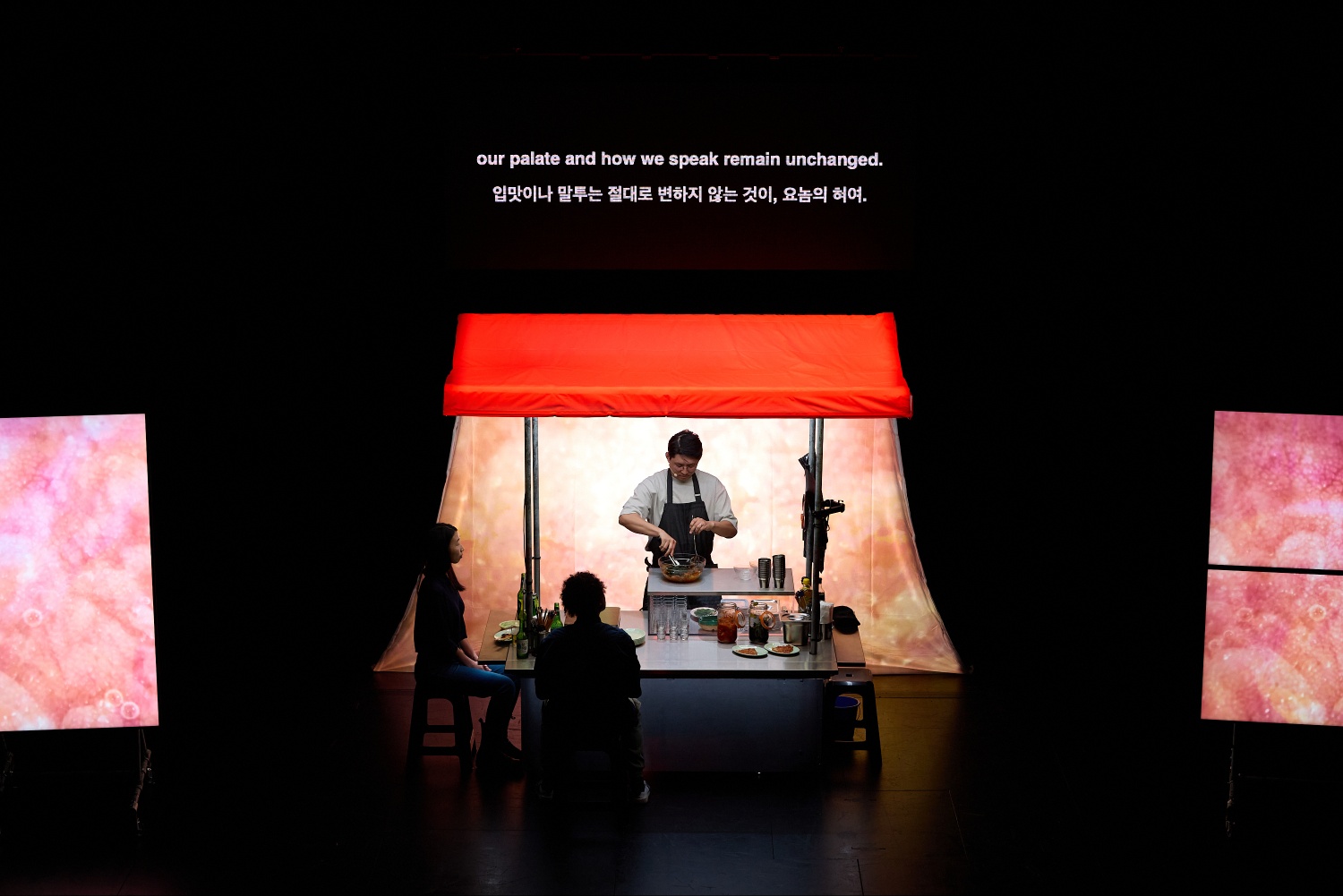
Haribo Kimchi (Photo courtesy: 2025 Seoul Performing Arts Festival)
Another notable production was Gulliver’s Travels: Zoom In Out by Theatre Company Haddangse (written by Jung Seung-jin and Oh E-bada; directed by Yoon Si-jung, Haddangse Theater 2, 16–26 October 2025), which employed smartphones as an integral performative tool. Through the alternating zoom-in and zoom-out of phone cameras, the play effectively conveyed the protagonist’s shifting sense of self while navigating relationships during a working holiday in Australia. The production successfully communicated its message—that meaning arises from subjective perception—engaging not only diverse adult audiences but children as well.
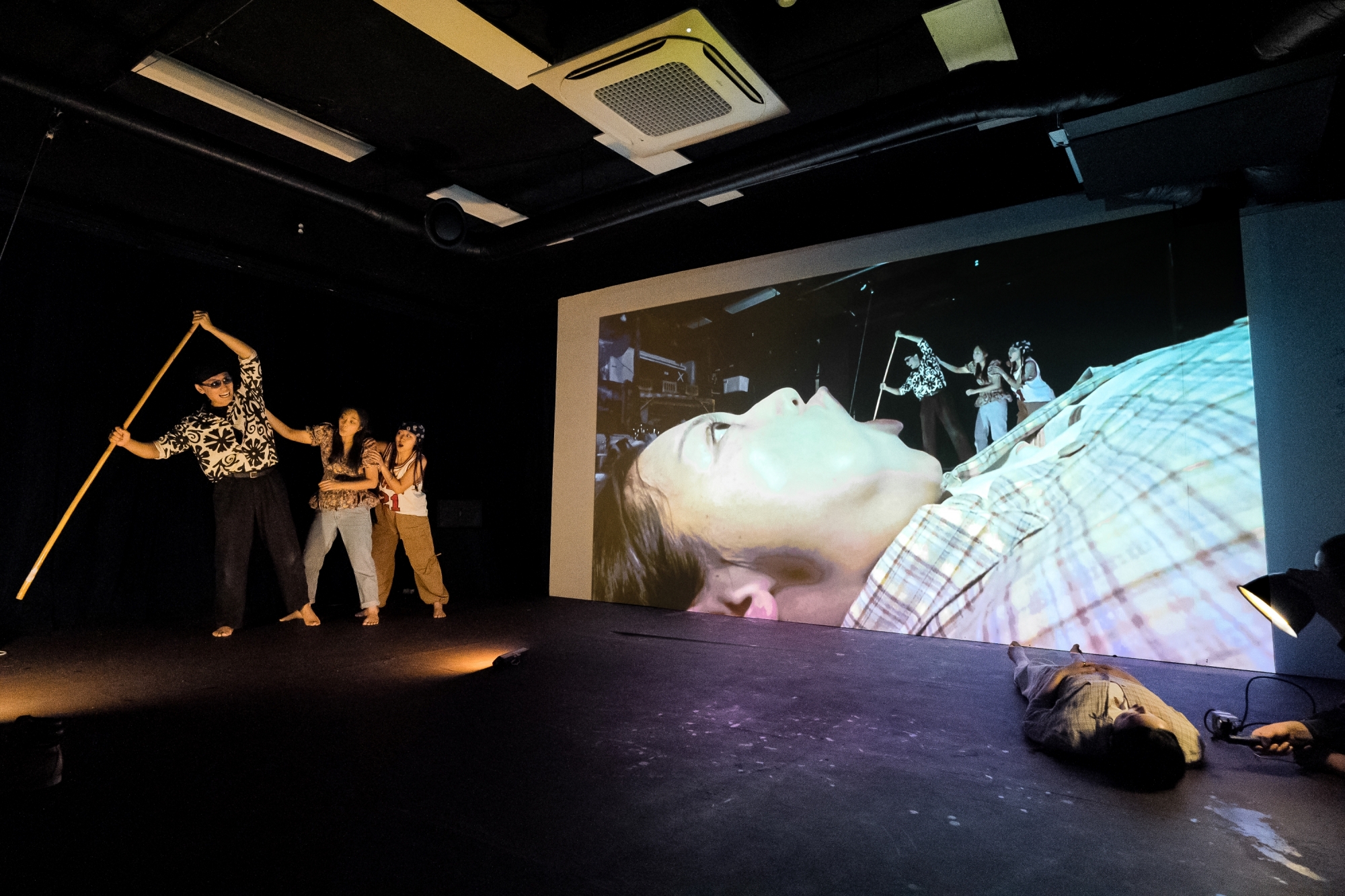
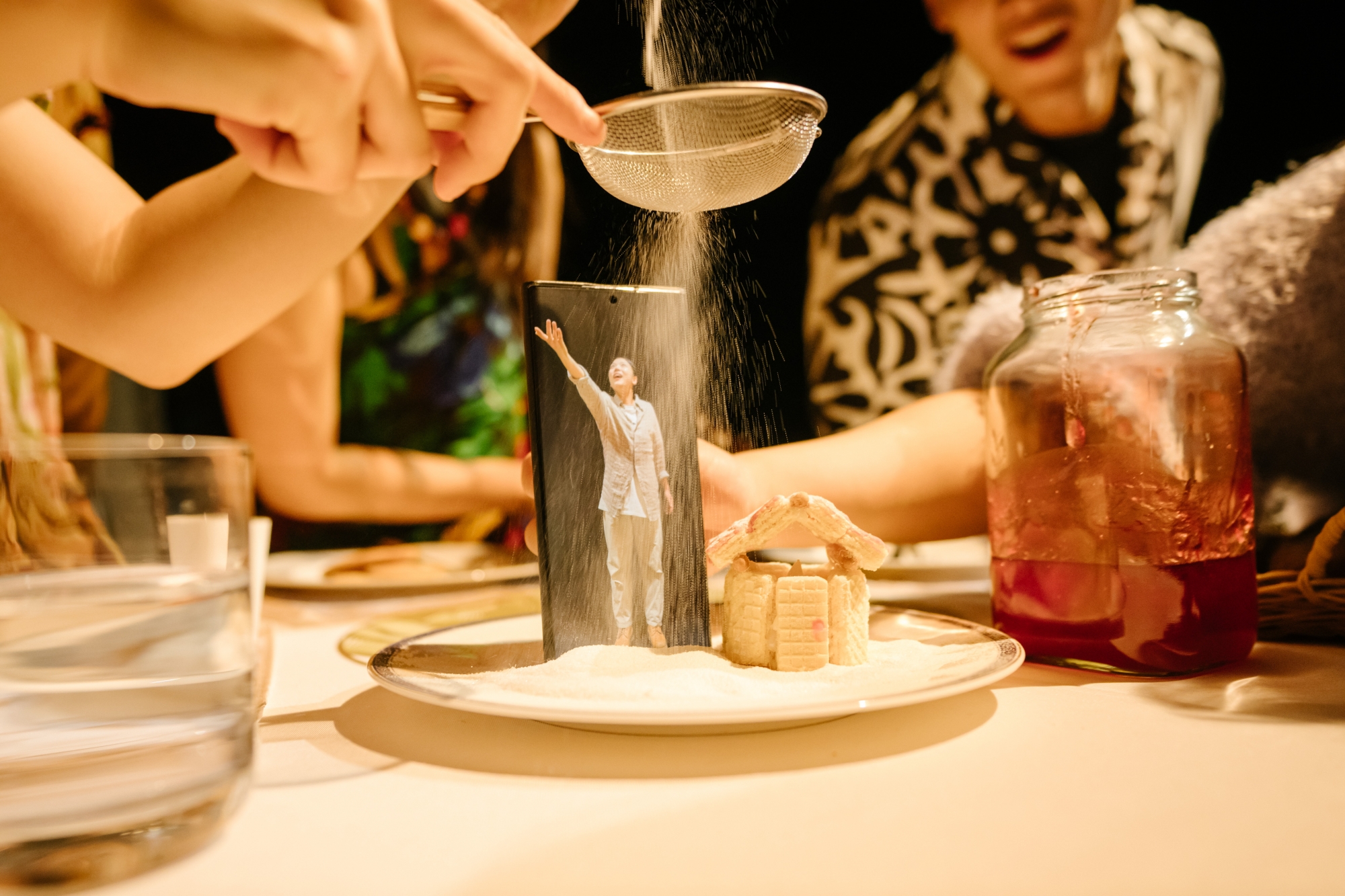
Gulliver’s Travels: Zoom In Out (Photo courtesy: Theatre Company Haddangse)
In sum, the Korean theatre scene of 2025 reveals a rich tapestry of changes: musicals that expand audiences through regional engagement, post-industrial performance strategies that meticulously cultivate spectatorship, and technologically driven works that broaden the boundary of theatre. In an era dominated by screens and increasingly shaped by AI-generated virtual realities, the value of live, face-to-face theatrical encounters grows ever more precious. The ongoing diversification and expansion of audience engagement point toward the future paths Korean theatre may continue to explore.
[1] For more detail: Lee Hwawon, “‘Arirang,’ Combining Past and Present as well as the Representation and the Presentation”, Korean Music Daily, November 11, 2025.
[2] For more detail: Lee Hwawon, “Wiping Away Tears of Danjong and Youngwol”, Theatre Criticism, Korean Association of Theatre Critics, No.119, Winter 2025.
[3] For more detail: Lee Hwawon, “The Interweaving in the Contemporary Discourse of Asian Pacific Performances of Seoul Performing Arts Festival, 2025”, Theatre Criticism, Korean Association of Theatre Critics, No. 120, Spring 2026 (to be published).
本網站內一切內容之版權均屬國際演藝評論家協會(香港分會)及原作者所有,未經本會及/或原作者書面同意,不得轉載。