






2025年12月
As the performing arts resume following the pandemic, a wave of diverse performances is revitalising the Korean theatre scene. With such a plethora of productions, distinguishing between the exceptional and the mediocre proves challenging, yet there is hope that these varied performances will lead to more sophisticated outcomes in the near future. This article explores some notable characteristics of today’s theatre landscape.
A salient trend observed within the contemporary theatrical landscape is the dynamic engagement of nascent companies, which are increasingly dealing with some contemporary issues. Furthermore, the resurgence of classical repertoire and masterworks merits scholarly attention, given that their innovative interpretations and contemporary realisations consistently captivate both audiences and critics. Across both aforementioned manifestations, a discernible reflection of present-day Korean society is evident.
Interest in Specific Themes
Starting about 20 years ago, the number of university theatre-related programmes in Korea began to increase sharply. This was driven by a desire to enhance the visibility of universities, as many were promoting their theatre programmes as places that educate star entertainers, coinciding with a growing fascination among the youth for the entertainment industry. The number of theatre-related programmes, which was around 10 nationwide, has constantly increased up to about 60. More than a decade has passed since these programmes commenced graduating students, resulting in an unprecedented increase in the population of emerging theatre artists. Consequently, numerous cultural and arts support organisations in Korea have intensified their patronage towards this burgeoning cohort. While a discernible inclination exists for such support to be concentrated on specific thematic areas and some planning groups, the activities of nascent companies and creative ensembles within contemporary Korean theatre exhibit unparalleled prominence. The thematic content of recent performances frequently engages with salient societal issues stemming from this milieu, specifically topics such as queer identity, equitable labour practices, and fostering awareness regarding the climate crisis and the implications of artificial intelligence and humanoids.
Among works dealing with queer narratives, the most notable is Dried Chili Pepper and Peach-Scented Lipstick (written by Seo Dong-min, directed by Kang Hoon-goo, performed by the Gongnori Club at the ARKO Arts Theater). This piece explores a character’s quest for queer identity within a struggling family dynamic. In a dilapidated apartment, Eun-bin, a high school student yearning for independence from her overburdened mother and nagging grandmother, becomes suspicious of her brother’s identity when her beloved peach-scented lipstick mysteriously disappears. Comically, she attempts to prevent his coming out as she seeks her escape from home. The play’s unique approach features four actors alternately changing roles, enhancing its playful and engaging nature.
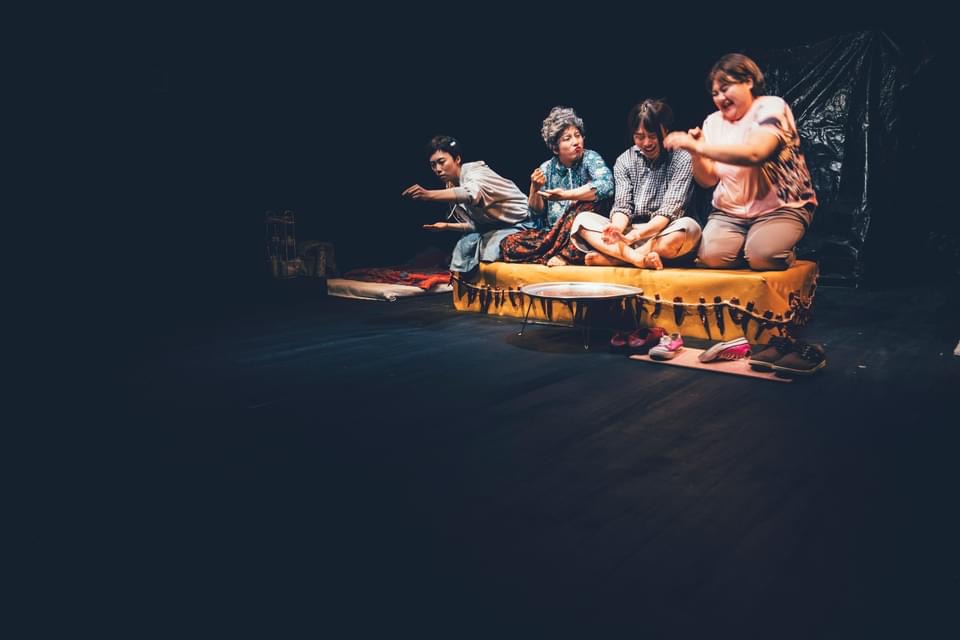
Dried Chili Pepper and Peach-Scented Lipstick (Photo courtesy: Gongnori Club)
Another significant work is You Can’t Make a Life Out of Not Getting Slapped in the Face (written by Saekja and Khoo Ja-hye, directed by Khoo Ja-hye, performed at the ARKO Arts Theater), which features 69-year-old Saekja portraying her own autobiographical experience as a transgender woman. Her dynamic performance includes singing and dancing, drawing considerable attention and prompting multiple reruns.
The theme of unfair labour conditions has also been highlighted in several productions. In the fall season of 2025, End Wall – What Lies Beyond That Wall? (written and directed by Ha Su-min, performed by the Immediately Reaction Theatre at the Daehakro Theater QUAD) tackles the industrial accidents, while Mukti (directed by Kang Ryang-won, performed by the Dong Theatre at the Daehakro Arts Theater) focuses on the issue of migrant workers. End Wall – What Lies Beyond That Wall? presents the story of a young man who dies when an open container collapses, blending reality and fantasy against a symbolic stage. In contrast, Mukti depicts migrant workers, set as “gods”, labouring in a lotus field, confronting discrimination and oppression with a rich tapestry of realistic and symbolic acting styles. The physical embodiment of the actors significantly enhances the portrayal, creating a lasting impression through their shared struggle.
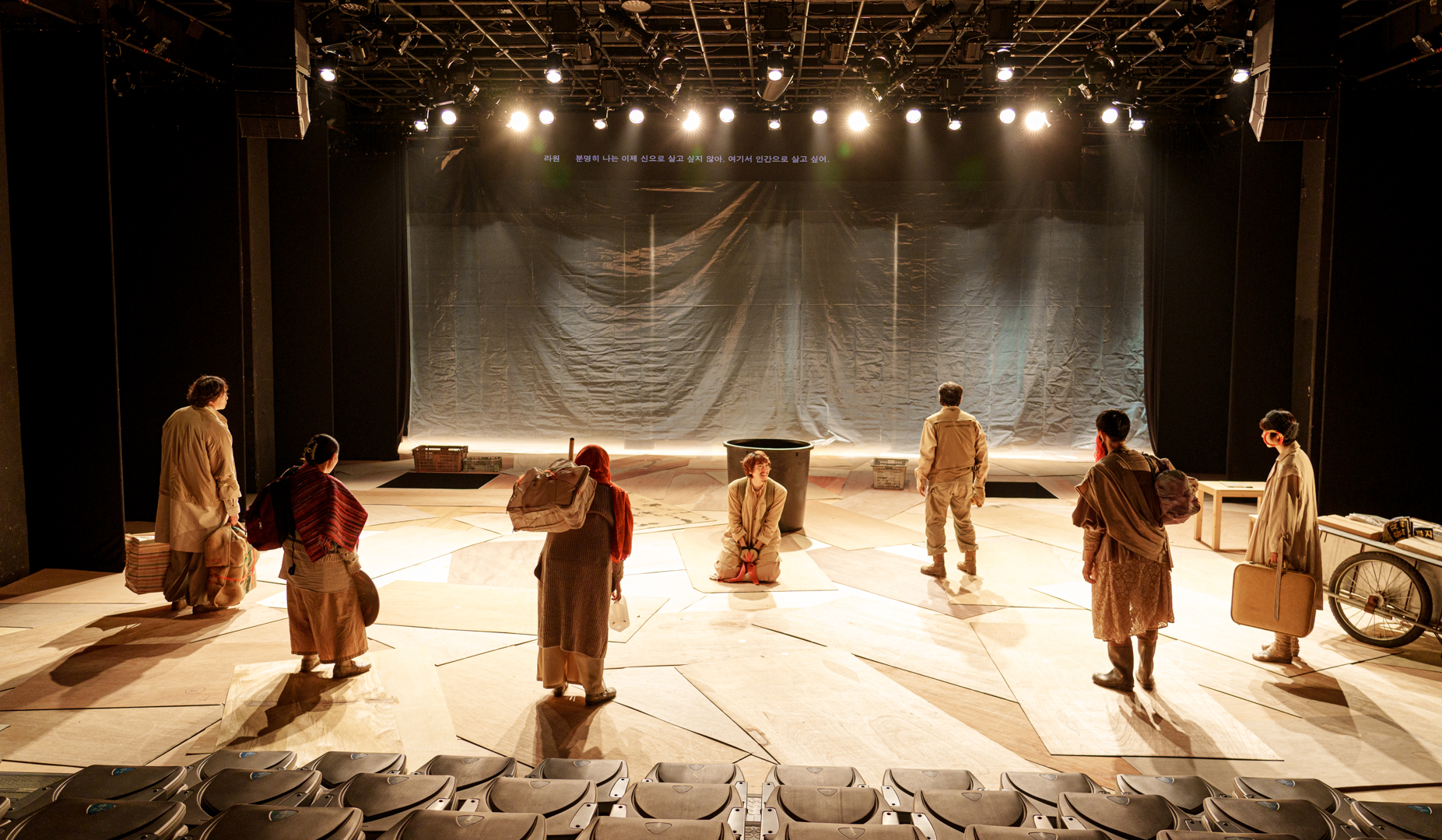
Mukti (Photo courtesy: Dong Theatre)
Public institutions and theatres in Korea have offered opportunities for young theatre artists to address the issue of the climate crisis through planned projects in recent years. In particular, the Arts Council Korea has launched the “Unvisited Theatre” project, a performance project themed around the climate crisis, set to take place from 1 to 13 July, 2025, at the ARKO Arts Theater and Daehakro Arts Theater. This newly initiated project invites audiences to walk around various spaces in the theatre while contemplating the climate crisis. Performances in this project include Discovering Fungi – Theatre Fungi, which tells a story of regeneration and recovery through fungi, The Garden in Front of the Theatre, reflecting on the climate crisis using seeds, and The Bat House, which allows illusive experiences of ultrasonic bats moving in darkness. Following this, Happy Funeral, which metaphorically unfolds the last rites of humanity on the brink of a fictional apocalypse, met the audience. This work, created and performed by directors of former performances, Yoon Hye-jin, Lee Sung-jik, and Jeon Yoon-han, guides the audience in three groups, leading to the final destination lost in the cosmos. Through the “Unvisited Theatre” project, audiences engaged with the creative works of emerging theatre artists, exploring the theme of coexistence with diverse life forms in the context of the climate crisis.
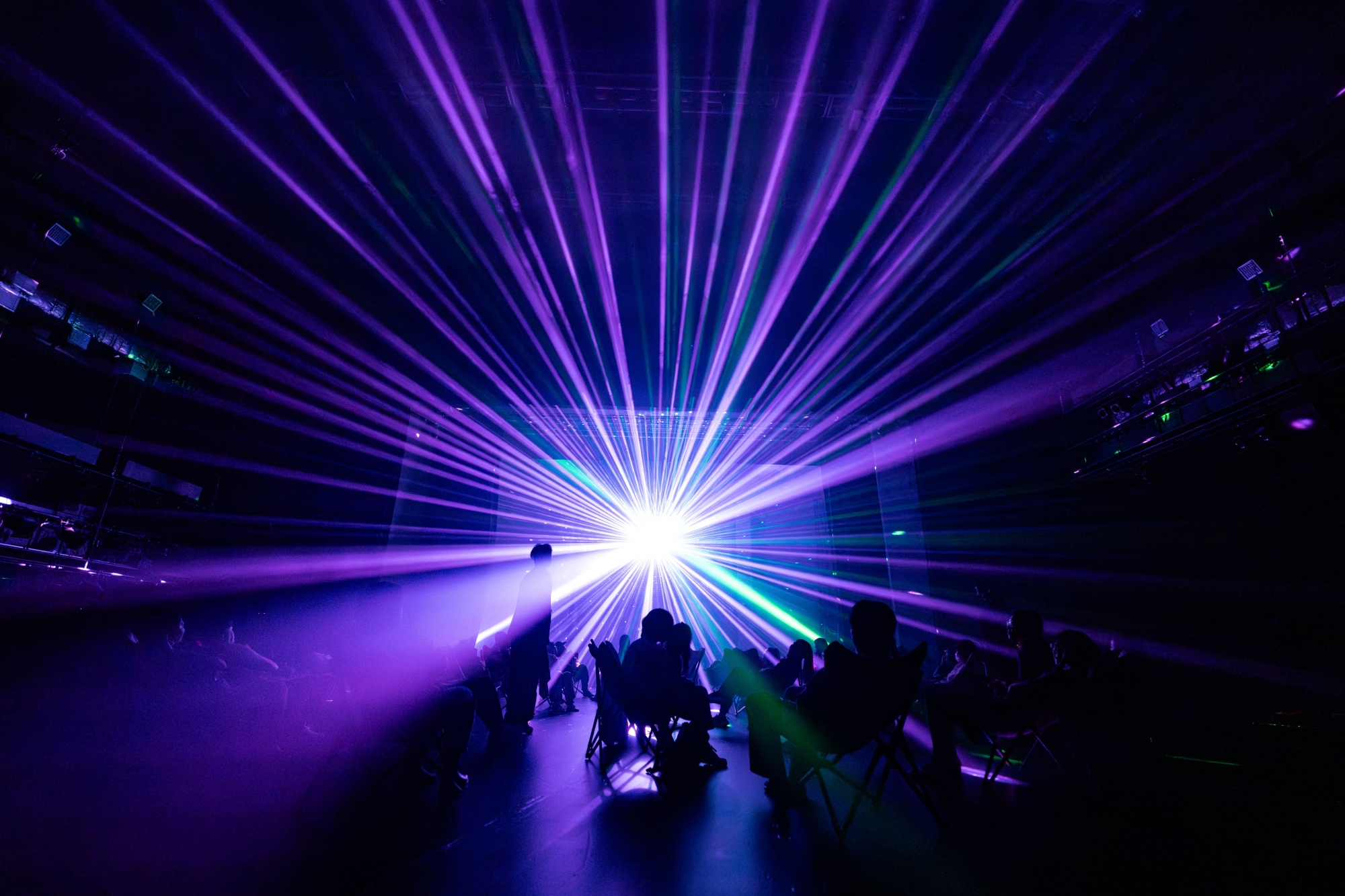
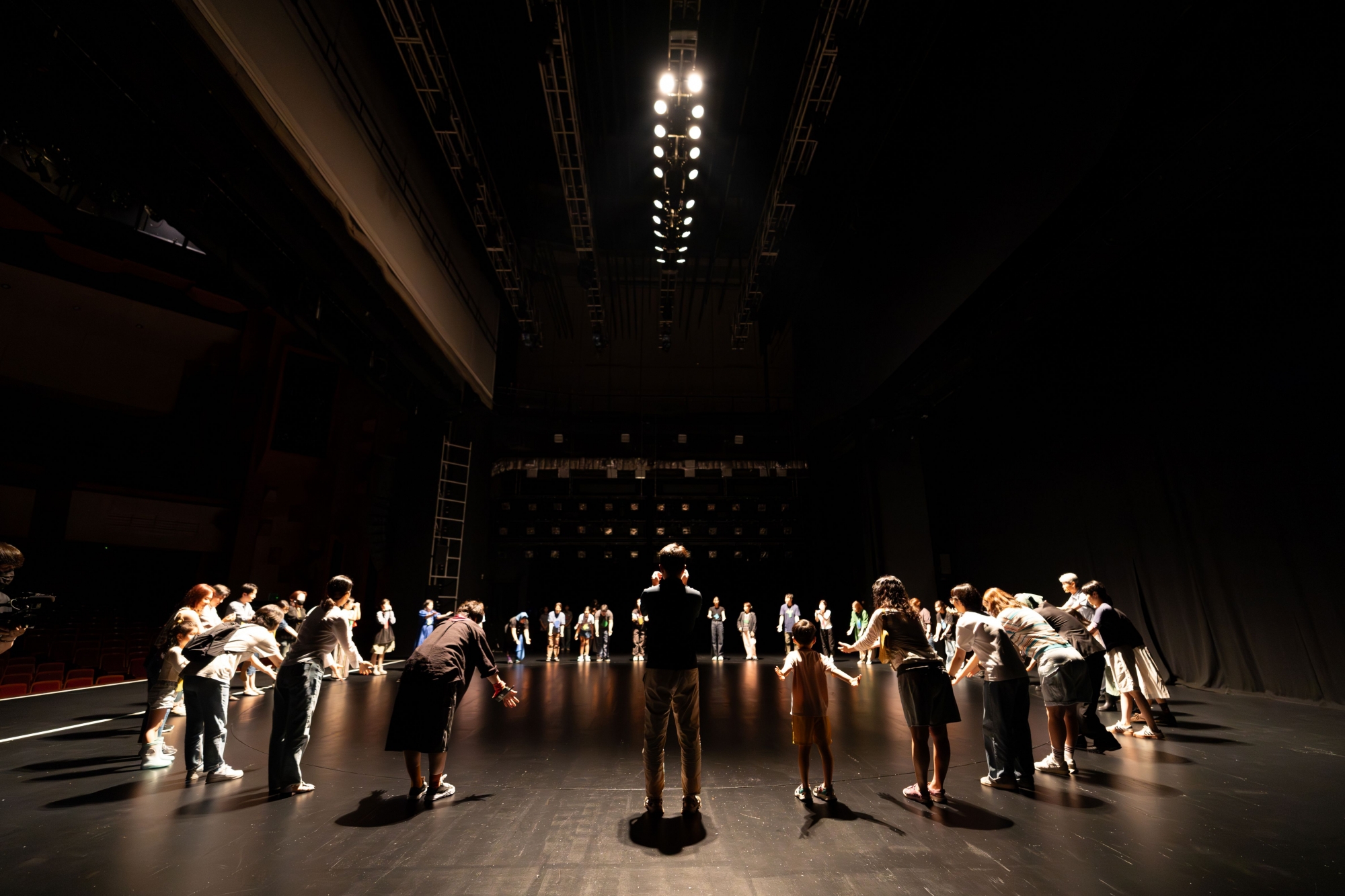
Happy Funeral (Photo courtesy: ARKO Arts Theater)
Furthermore, productions envisioning future societies in light of AI advancements have frequently appeared. Notably, A Thousand Blues, a novel by Cheon Seon-ran that won the Korean Science Literature Award in 2020, has been adapted for stage by the National Theater Company of Korea in 2024 and later turned into a musical by the Seoul Performing Arts Company in the same year with plans for a nationwide tour in 2025. This work is also on track to be adapted into a film by Warner Bros. Pictures in Hollywood. Set in the near future, it depicts the life of a robot designed for horse racing, who experiences a malfunction with its cognitive learning chip, leading to a series of life events. The intelligent robot falls off a horse while savouring the “blue sky” during a race. Facing disposal, it forms a bond with a girl named Yeon-jae, who rescues and repairs it, as they embrace and heal the wounds and pains of surrounding characters, including a racehorse named Today. The work’s message, reflecting on the infinite possibilities of the blue sky and reclaiming the leisure to live slowly from a fast-paced life, leaves a lingering impression. The musical version captivates audiences with fitting music and features puppets of robots and horses with puppeteers moving them on stage, providing a unique viewing experience.
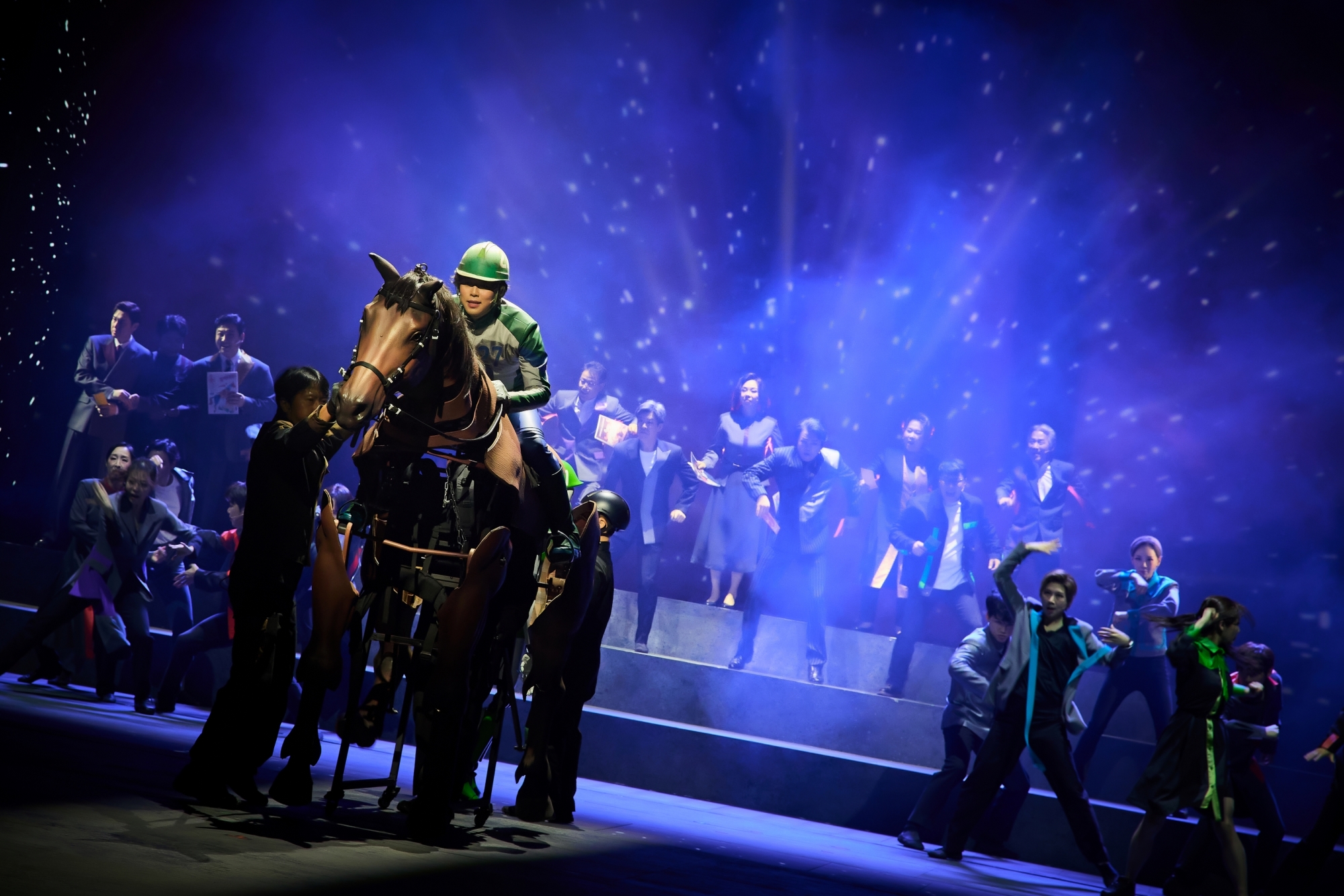
A Thousand Blues (Photo courtesy: Seoul Performing Arts Company)
Additionally, Simulation (written by Choi Yang-hyun, directed by Lee Tae-rin, performed at the Traveler’s Theater and Daehakro Theater QUAD), presented in the previous fall, portrays a man’s life who revives his deceased wife in a near-future setting. The programme “Simulation” creates a cloned human using inputted information, enabling the deceased to coexist with the living. The work poses profound questions about whether such summoning can genuinely restore the lives of the departed among the living and what choices humanity must make in the space between reality and virtuality.
Consistent Performances of Masterpieces
While the trend of staging specific contemporary societal issues has grown particularly prominent since the onset of the COVID-19 era, the staging of classic masterpieces continues steadily. Although primarily driven by large theatres or public venues, many small- to medium-sized private troupes are also persistently engaging in adaptations of classic works.
Notably, in the first half of 2025, Henrik Ibsen’s Hedda Gabler was produced and performed almost simultaneously by the LG Arts Center and the National Theater Company of Korea. Depending on the production direction, the LG Arts Center’s production featured a version adapted by Richard Eyre and directed by Jeon In-cheol, utilised video effectively and featured Hanryu star Lee Young-ae in the lead role to captivate a large theatre audience. After their scenes, the actors positioned themselves on chairs on either side of the stage, observing the performance. This production transcended the boundaries of realistic theatre, attracting substantial audiences and receiving positive acclaim. The psychological portrayal of characters, conveyed through the actors’ performances, was objectified and symbolised using video, giant balloons, and a statue on stage.
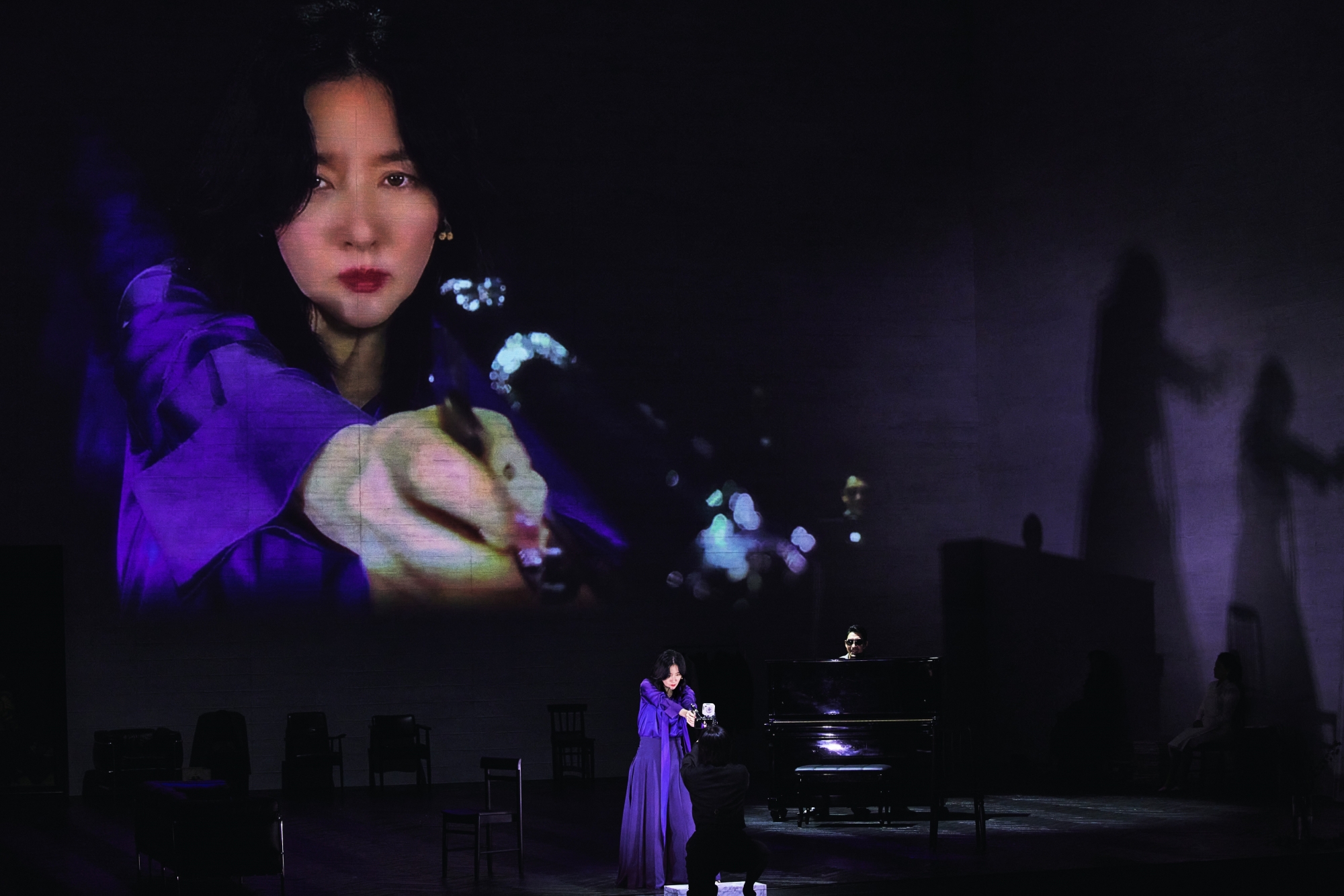
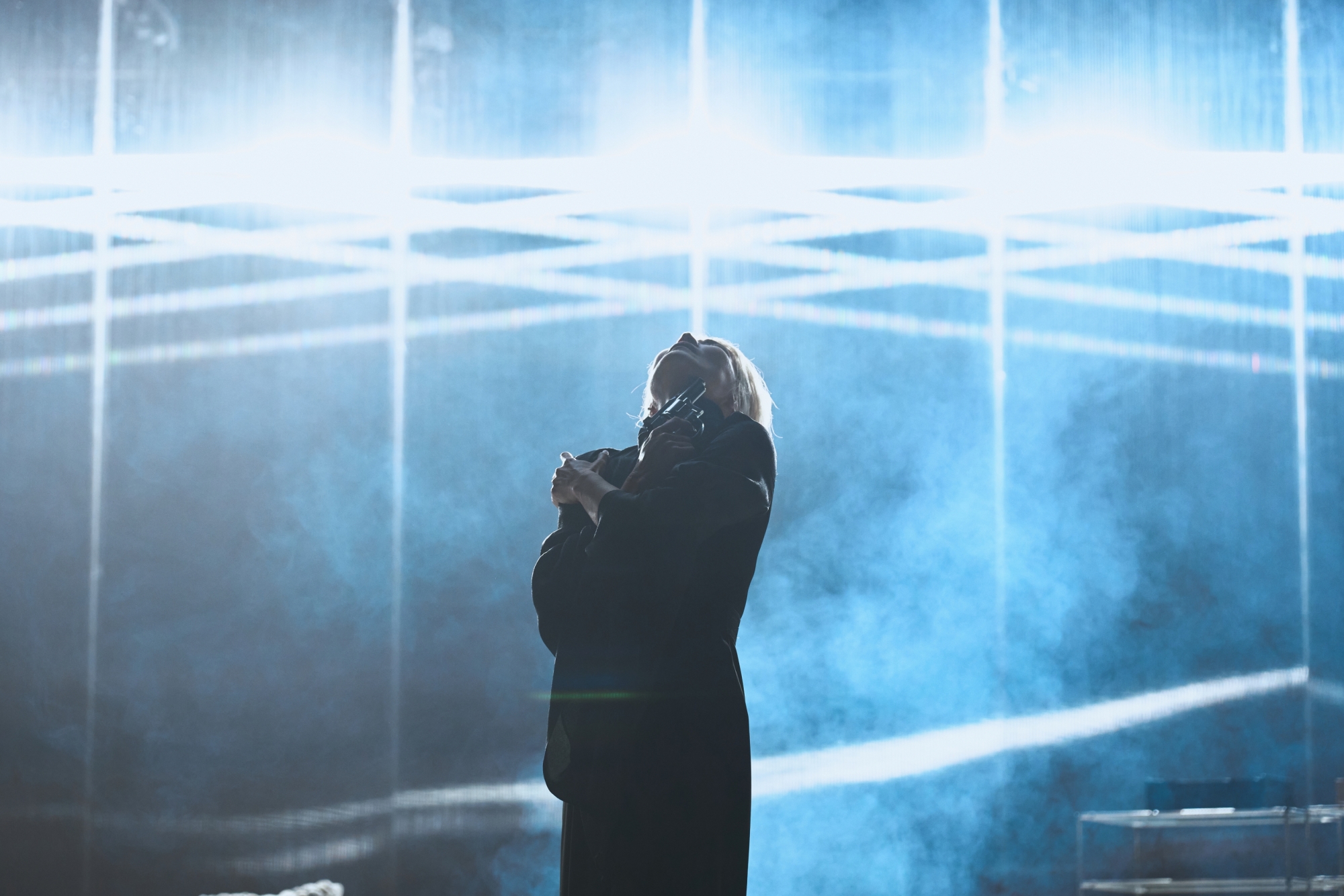
Hedda Gabler (Photo courtesy: [left] LG Arts Center, National Theater Company of Korea)
Meanwhile, the artistic director of the National Theater Company, Park Jeong-hee, restaged Hedda Gabler with renowned actress Lee Hye-young after a decade. The closer proximity to the audience at the National Central Theater in Myeongdong allowed for a nuanced portrayal of the characters’ traits and relationships, centred around Hedda’s elegant yet empty living room. Lee Hye-young’s mature performance in her sixties particularly captured the audience’s attention as the narrative spiralled toward catastrophe. The fire in the large circular stove at the centre of the stage symbolised the burning desire within the characters, highlighting the lethal nature of that flame when it ultimately consumed Lovborg’s manuscripts. When asked, “Why Hedda Gabler today?” one might reflect that Ibsen’s character offers a chilling glimpse into a self-destructive human archetype that transcends social and temporal boundaries.
In Incheon, its Metropolitan City Theatre Company staged Arthur Miller’s The Crucible (directed by Lee Sung-ryeol, performed at the Small Theatre of Incheon Culture and Arts Center) last fall. The solid ensemble of the Incheon Metropolitan City Theatre Company received great acclaim for their collaboration with Lee Sung-ryeol’s mature direction. The production aimed to reflect on today’s society, overwhelmed by the prevalence of fake news. Continuously working with dramaturg Cho Man-soo, Lee Sung-ryeol is also set to stage Arthur Miller’s All My Sons at Seondol Theater, produced by theatre company Baeksukwangbu at the end of this year. The cast includes prominent actors like Gil Hae-yeon and Park Wan-kyu. Through this work, Lee Sung-ryeol raises questions about whether true morality and conscience are possible in an era that cries out for fairness and justice, stemming from the tragedy created by one individual’s irresponsible mindset.
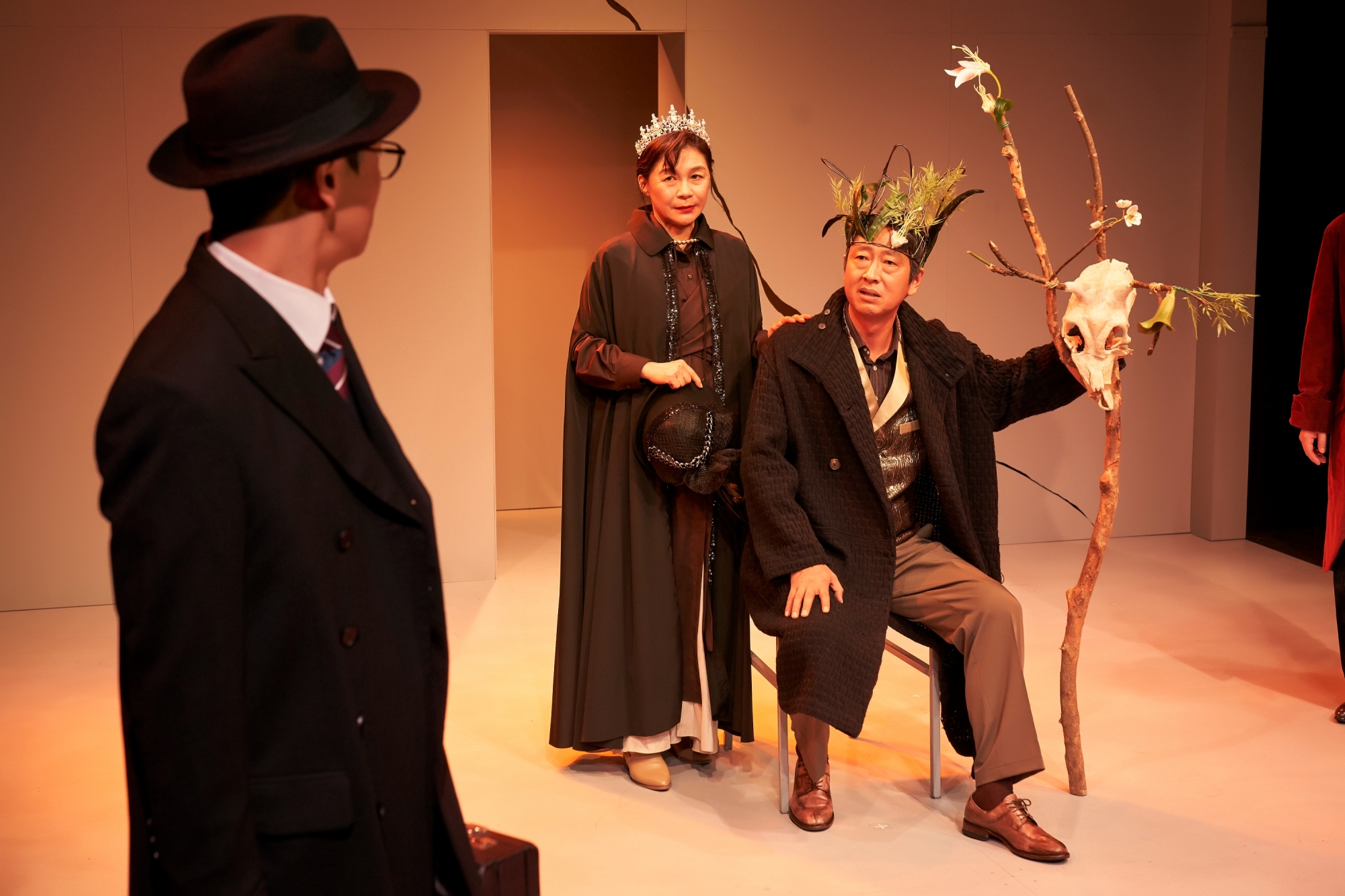
All My Sons (Photo courtesy: Baeksukwangbu)
Korea’s love for Chekhov remains robust. In a bold move that lacked public funding or support from major theatres, the Absurdity Project staged The Cherry Orchard, directed by Moon Sam-hwa at Traveler’s Theater. Prominent actors from the Daehakro theatre scene collaborated, leading the director to draw a darker conclusion than Chekhov’s original work. After selling the cherry orchard, the family abandons the estate, leaving the character Pirs alone, who cannot endure his confinement, to seek a tragic escape, collapsing like the severed trunks of cherry trees. This might reflect a growing tragic awareness of life that is even more profound than in Chekhov’s time.
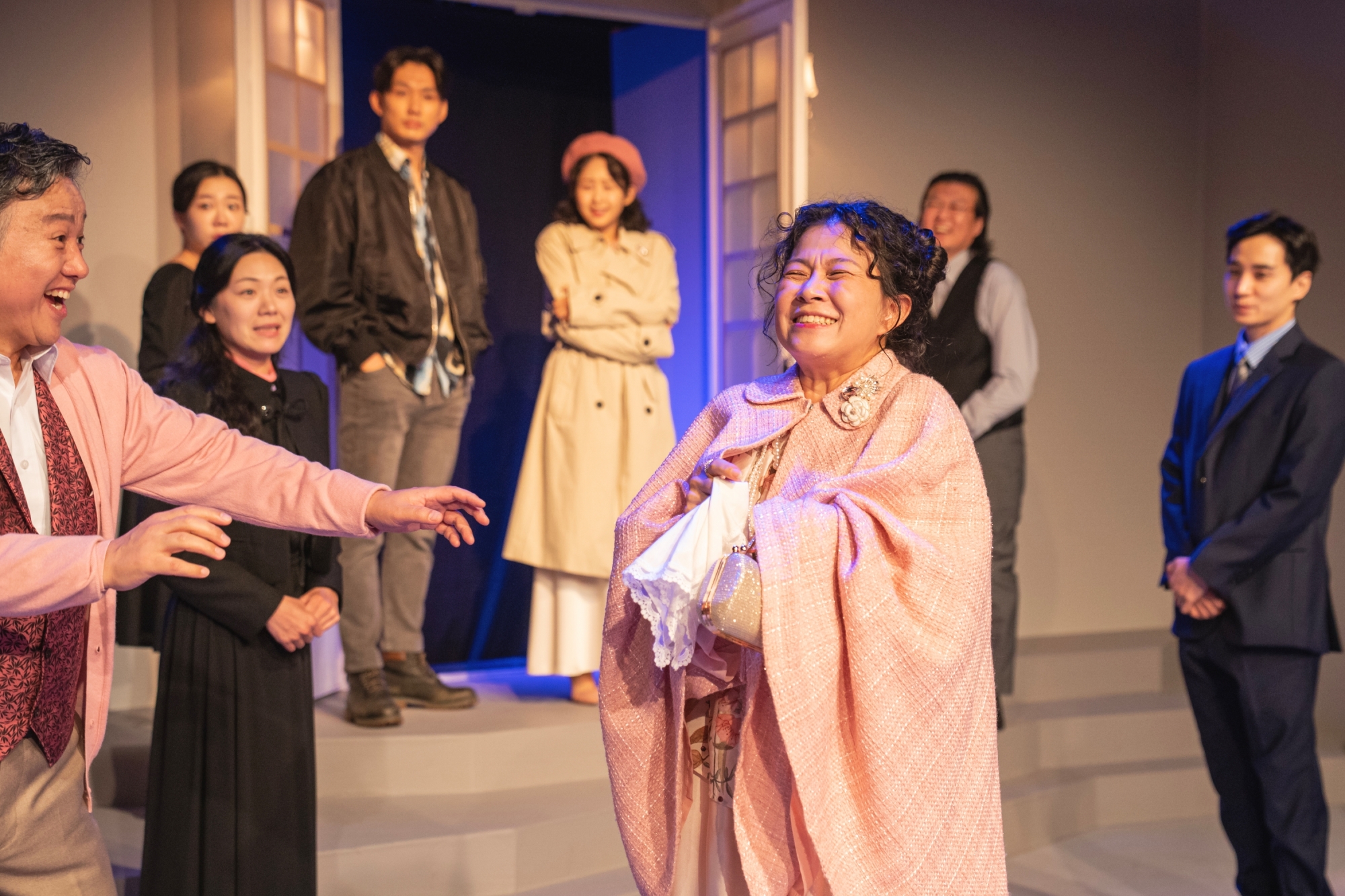
The Cherry Orchard (Photo courtesy: Absurdity Project)
Additionally, the Center for Arts beyond Boundaries (Centre d’Arts Sans Frontières), which has explored various performance environments and sought to broaden the theatre’s boundary, celebrated its 20th anniversary by launching a series of two-person plays, adapting Chekhov’s short story, The Bet (adapted by Lee Hwawon, directed by Yoon Andy Kihoon, collaborating with theatre company BEYOND, performed at Space T in Mullae). In this concise and refined production as Chekhov’s own style, a wealthy banker and a young lawyer debate whether the death penalty or life imprisonment is preferable. The lawyer accepts the banker’s bet of 2 million Rubles if he can endure 15 years in prison. Over the years, he immerses himself in reading, music, wine, and science, eventually focusing on the New Testament and religious studies. Meanwhile, the banker, having squandered his wealth on poor investments and gambling, contemplates murdering the lawyer as his deadline approaches. When the banker arrives at the prison, he finds that the lawyer has mysteriously vanished, leaving behind only a letter. While praising the civilisation and values humanity has created, the conclusion underscores its descent into chaos as the lawyer declines the bet’s reward and chooses to lose it instead. In contrast to the original story, this adaptation includes an ending in which the shocked banker becomes disillusioned with his life and confines himself within the lawyer’s prison. Reflecting the current global political landscape that casts doubt on the values humanity strives for, contemporary Korean theatre consequently offers a rather sombre prognosis for the future.
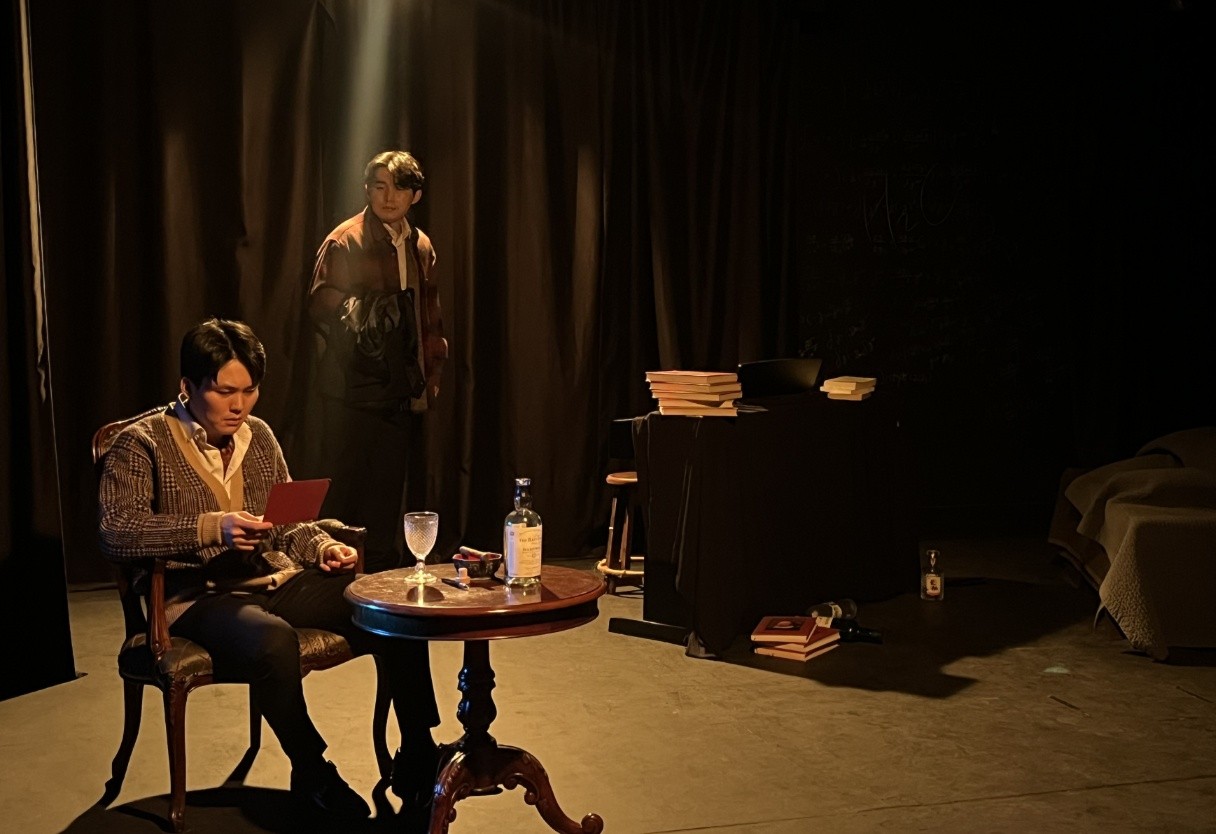
The Bet (Photo courtesy: Center for Arts beyond Boundaries)
Efforts to reinterpret and stage Shakespeare’s works continue steadily. Productions like Horror Is Show by the Seongbukdong Beedoolkee Theatre and Macbeth Report 2025 by theatre company Baba Circus have garnered attention for showcasing the active perspectives of their respective troupes. The recently performed Macbeth Report 2025 (written by Lee Eun-jin, directed by Sim Jae-wook and Lee Eun-jin, performed at the Yeonhee Arts Theater) begins with a lecture on human ambition for power. It presents the ecology of primates and their power-centric communities through the actors’ physical expressions, humorously depicting the witches’ prophecies, the murder of King Duncan, and the ensuing downfall of Macbeth and Lady Macbeth within a neutral space-time. Mid-performance, a moderator engages both the audience and the actors in a discussion entitled “What if I had absolute power?”. The production skilfully utilises spatial arrangements and the actors’ fluid transformations to create a vibrant and meaningful experience. Through this performance, it becomes evident that the increasingly powerful leaders of great nations who threaten the world are being satirised.
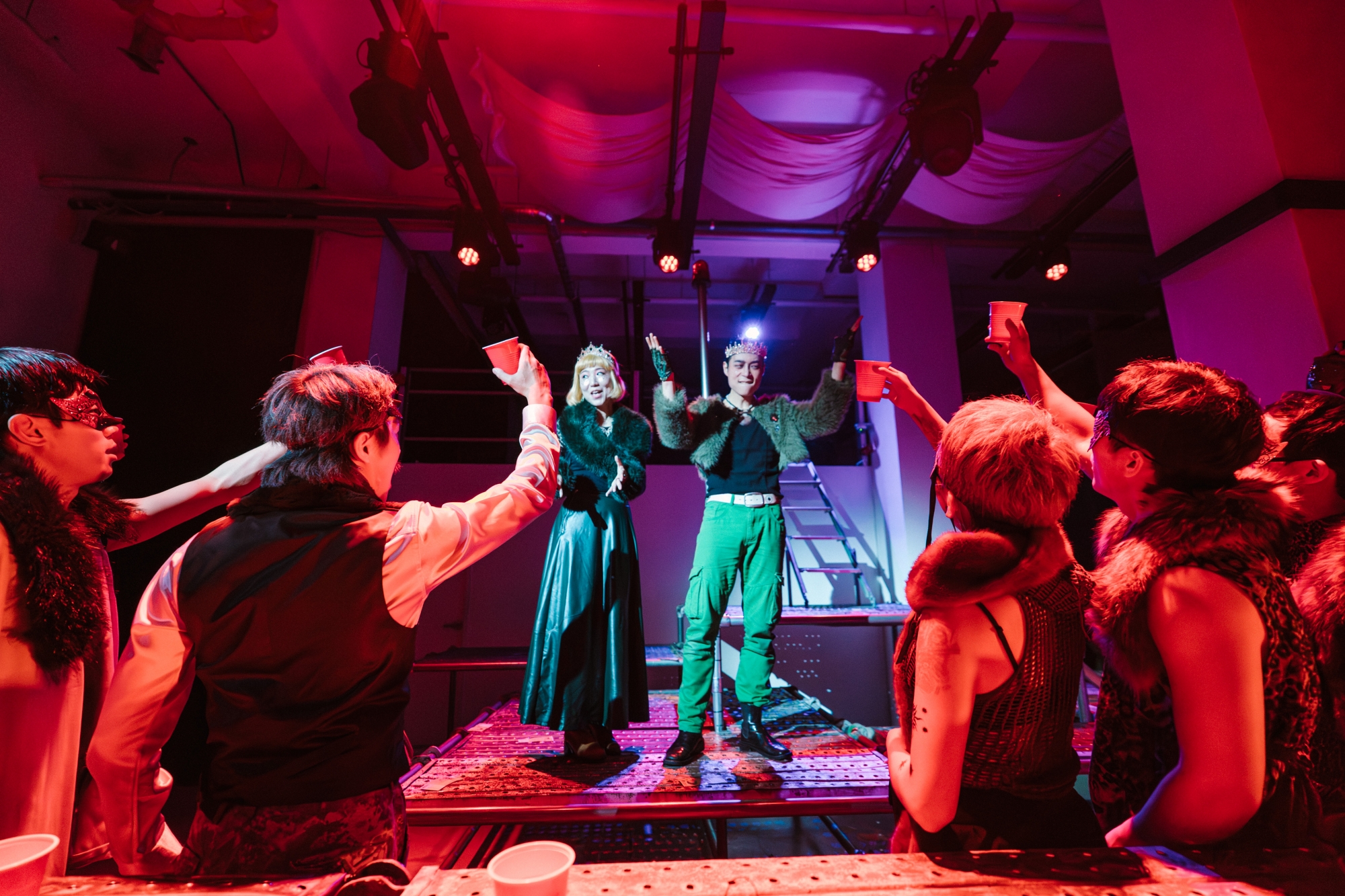
Macbeth Report 2025 (Photo courtesy: Baba Circus)
It is fortunate that Korean theatre, which had been stifled by the pandemic is awakening to diversity. The reflection of society through theatre has been an accepted norm since ancient times. Employing a diverse spectrum of expressive methodologies, ranging from naturalistic depictions to post-dramatic fragmentation, contemporary Korean theatre offers extended insight into the prevailing socio-environmental context, thereby facilitating critical self-reflection on one’s positioning within it. It is hoped that the somewhat dark aspects of our society can brighten in the future through the reflective and introspective efficacy that theatre provides.
本網站內一切內容之版權均屬國際演藝評論家協會(香港分會)及原作者所有,未經本會及/或原作者書面同意,不得轉載。